
A Gap in the Housing Cycle
ORIGINALLY APPEARED IN THE 2020 METHOW HOME.
BY RAY JOHNSTON
A healthy town has several essential ingredients: They are jobs derived form the production or provision of something that is desire; there are work places; and there is accessible housing. The health of a community must be dynamic, shifting and evolving over time to meet new conditions.
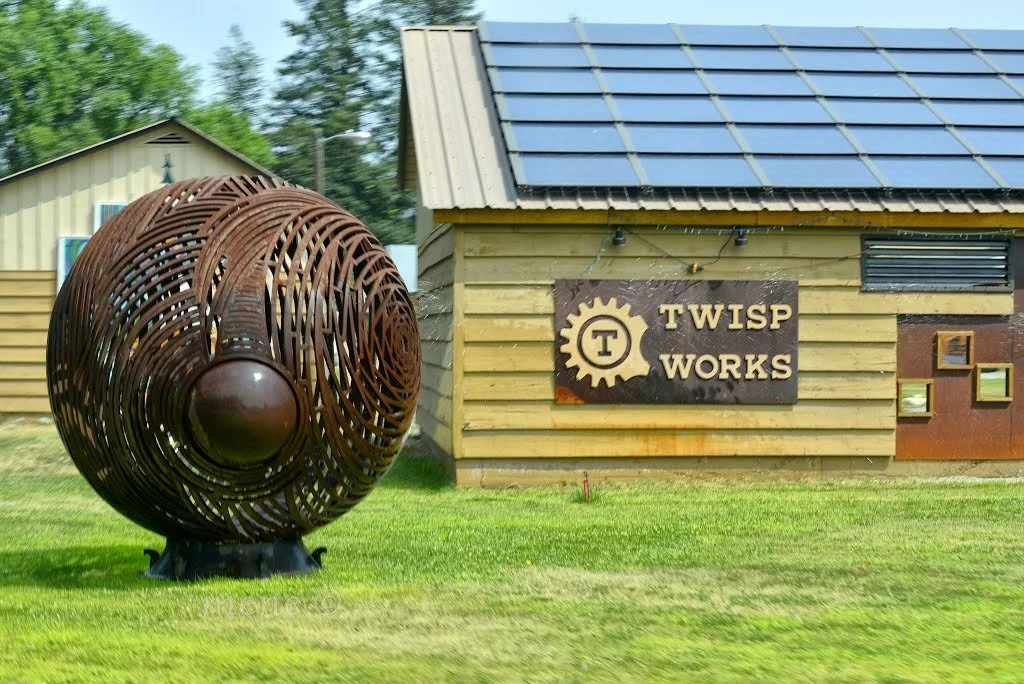
TwispWorks serves as the home to 35 businesses, civic organizations, nonprofits, and artists operating on campus.
The Methow Valley is adapting well. We are adapting new technology while adding infrastructure and amenities that help make our community resilient. We are taking care of our elders, our environment and the vulnerable among us. We are also responding in true Methow spirit, to the housing crisis that permeates our society, both urban and rural.
The Methow Housing Trust is doing important work in making home ownership available to those who qualify. But that is only one response to a challenge that requires numerous responses - as many responses as there are difficult lifestyles, phases of life, and personal circumstances among people who choose to live and thrive here in the valley.
As a community, we are adapting successfully to a changing business environment. We have developed a regional economy strengthened by tourism and recreation, supported by a realignment of our use and stewardship of natural resources. Local entrepreneurs introduced us to new products and processes on the horizon that support our goals, from new kinds of forest products, to rediscovered crop species and animal husbandry. We are attuned to cycles: economic, generational, and natural/ However, one cycle that we need to address more attentively is the housing cycle - not necessarily the supply/demand/cost cycle, but the life cycle of our community’s varying housing needs.
When young people, either raised in the Methow Valley or from afar, come here to settle down, they strengthen our community in a multitude of ways. Taking advantage of professional opportunities that weren’t available to their parents or grandparents, such as working remotely via the internet or establishing new businesses and services that did not exist a generation ago, they are diversifying our economy and setting our region up for continued health.
What’s Missing
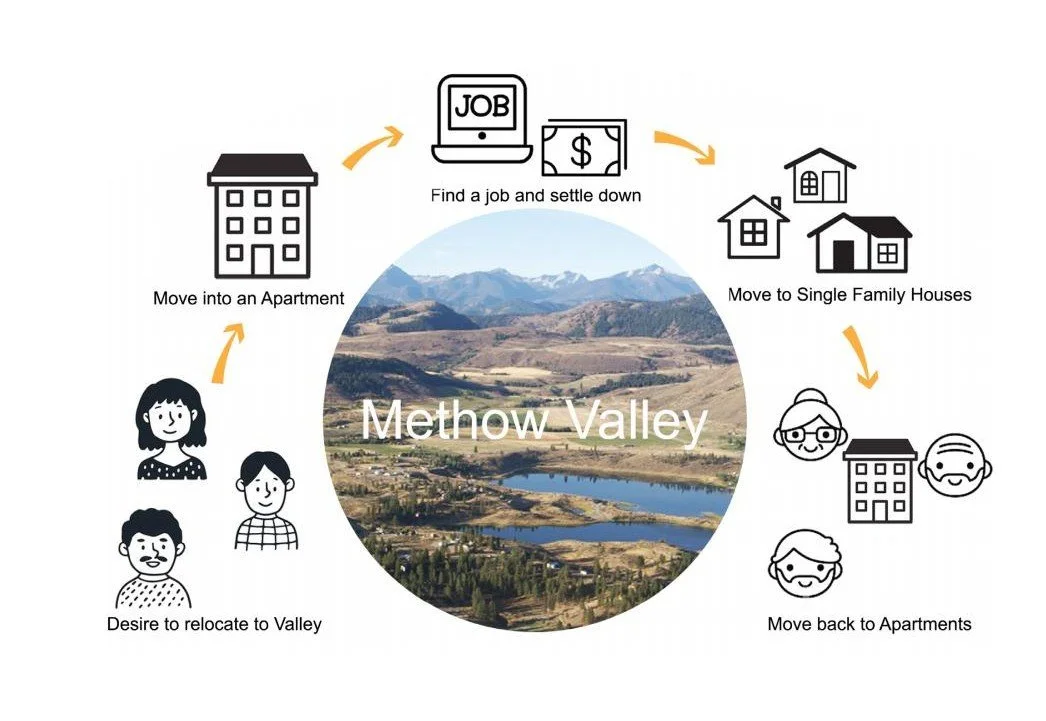
When folks near retirement age relocate here and still work remotely, they also add to the local economy and our social infrastructure. Among both groups there remains a lot of mobility. Younger people want flexibility to travel and explore; older people often want to downsize, and both may not want the responsibility of land and personal property. What is missing in our current housing lifecycle are quality rental homes: houses, apartments, or other configurations: duplexes, triplexes, and townhomes.
Frequently, the rental properties that do exist in the valley are siphoned off by the lucrative vacation rental industry. Apartments have not been part of the previous building cycles, so very few of them exist in the Methow, so the workers drawn here by our burgeoning economy, interested in establishing themselves in the valley, have limited housing options. If they are fortunate, they may have friends who offer them opportunities to rent something that has not already been scooped up by the short-term rental market. More seasoned newcomers may find housing to purchase, but sometimes they would rather begin by renting, trying out the Methow Valley lifestyle before committing to owning a home. A healthy community offers options in all things, including housing. To strengthen the health of the Methow, we must offer more housing diversity so that new residents can find a place to call home retiring elders can find a rental properties that allow aging in place and those whose lives change unexpectedly can look to rental properties to bridge the gap to a new chapter in life.
Rental housing is a part of all communities, not only cities or larger towns. More in-town options for denser living will allow us to keep our treasured rural character elsewhere. It makes clear economic sense to provide quality rental housing as part of the Methow Valley lifestyle. We offer prospective residents and visitors who want to come to work, play, and contribute to our communities.
Meeting the Challenge
What is hindering the development of this missing link in the housing cycle? Could it be relatively low rental rates and thus a low rate of return? The misconception that there is not enough of a demand for rentals? Are potential developers of rental properties inhibited by a lack of investment capital?
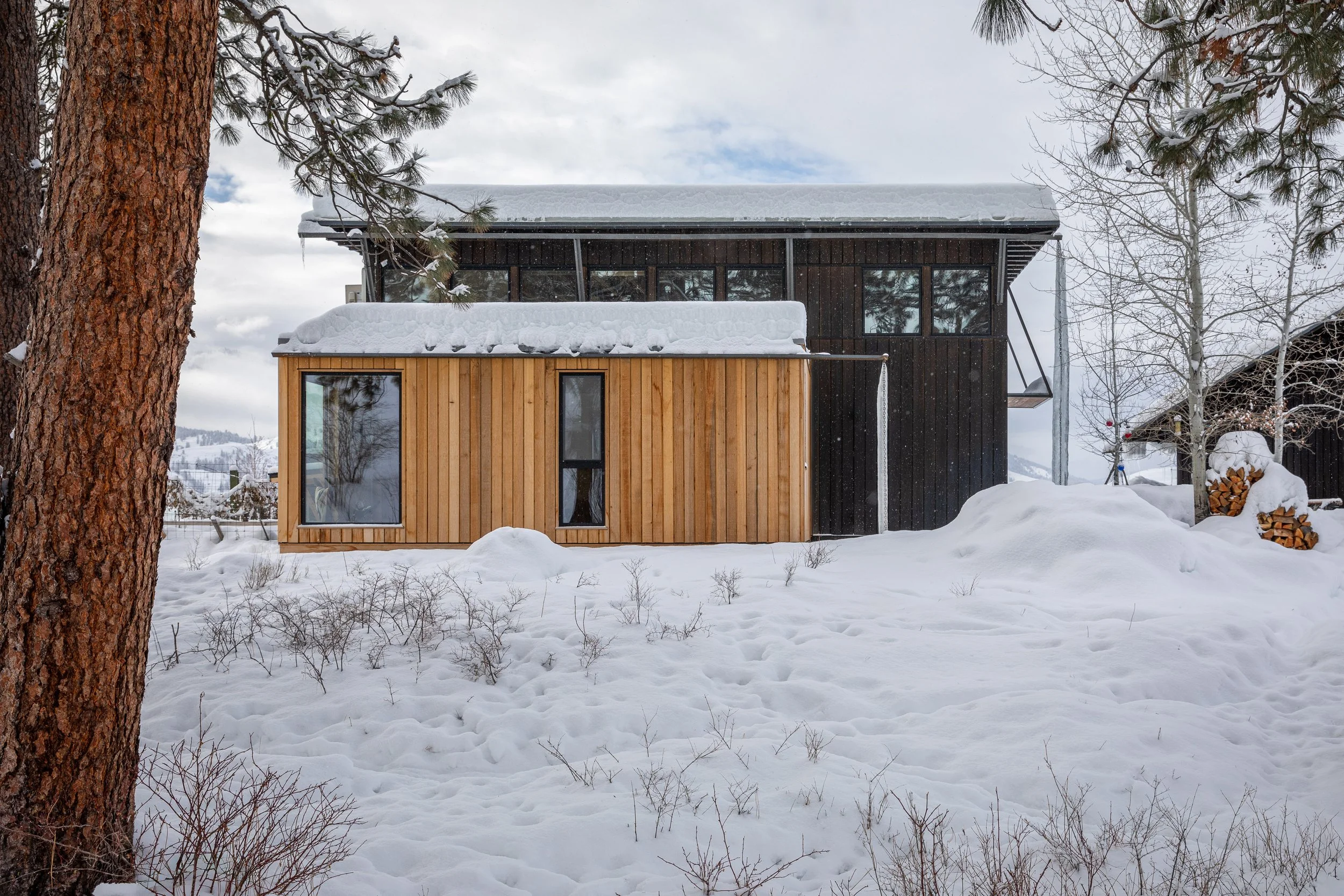
Twisp Addition / Photo by Benj Drummond
The Methow has always found unique and imaginative way to meet challenges head on, so taking a nonprofit approach to this problem might produce a solution and fill the housing gap. Creating subsidies to offset the costs of market-rate properties for lower-income residents is one option. Enticing developers to build more rental properties with tax incentives or lower-interest financing may produce an influx of housing in a shorter amount of time.
Conducting a market study will likely reveal that the next decade will bring higher paying jobs to the valley, bringing higher rent potentials and encouraging additional development in that direction. Perhaps simplified Detached Accessory Dwelling Unit designs would promote multiple small homes on more rural sites.
The hope is that one, or many, of these concepts help bring the valley the essential ingredient of rental housing, completing the housing life cycle and creating a sustainable and healthy community, culture, and economic environment in the Methow.
Ray Johnston is a principal in Seattle-based Johnston Architects, who have designed many Methow Valley Homes.