
Greenfire Campus
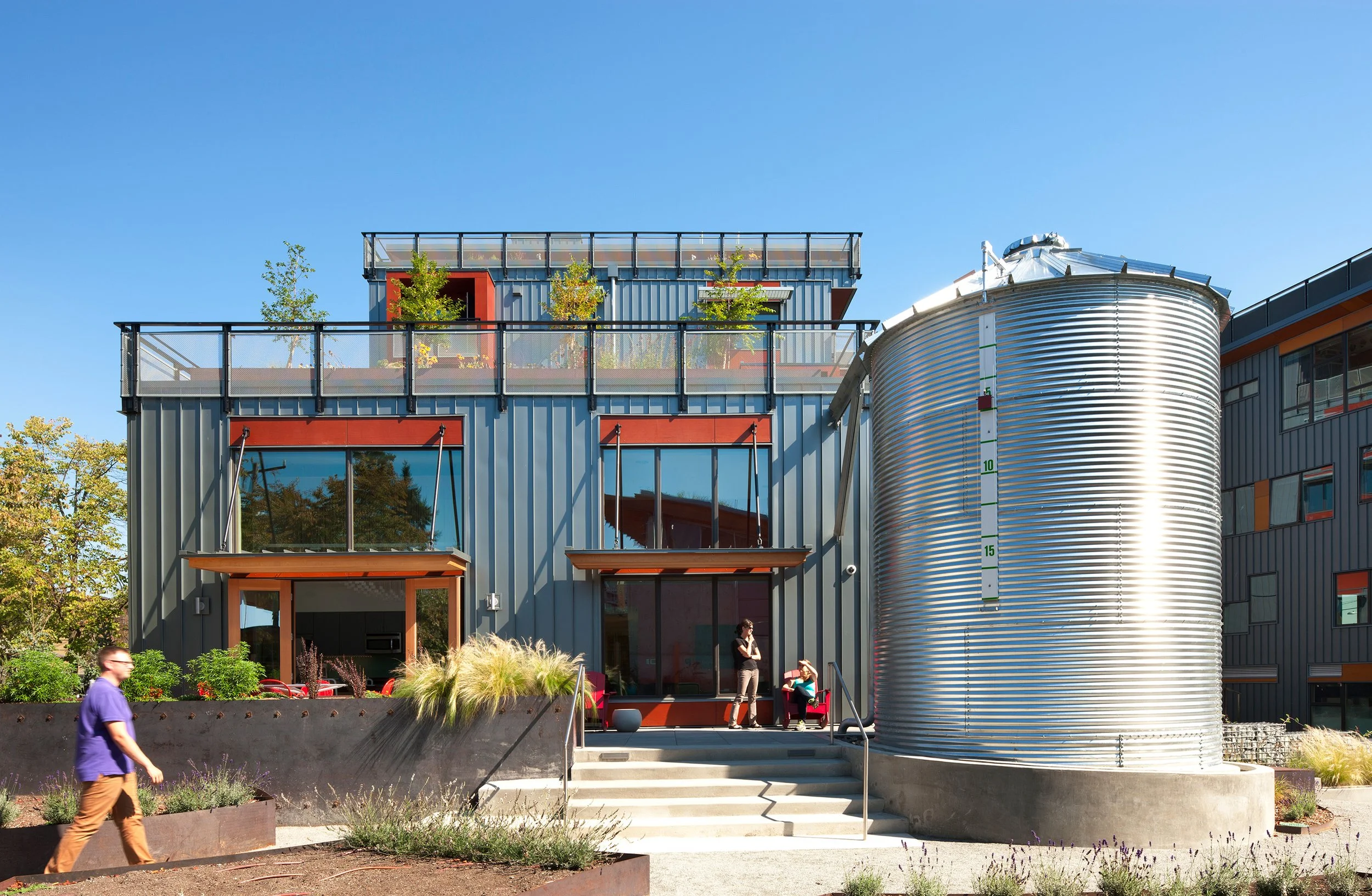
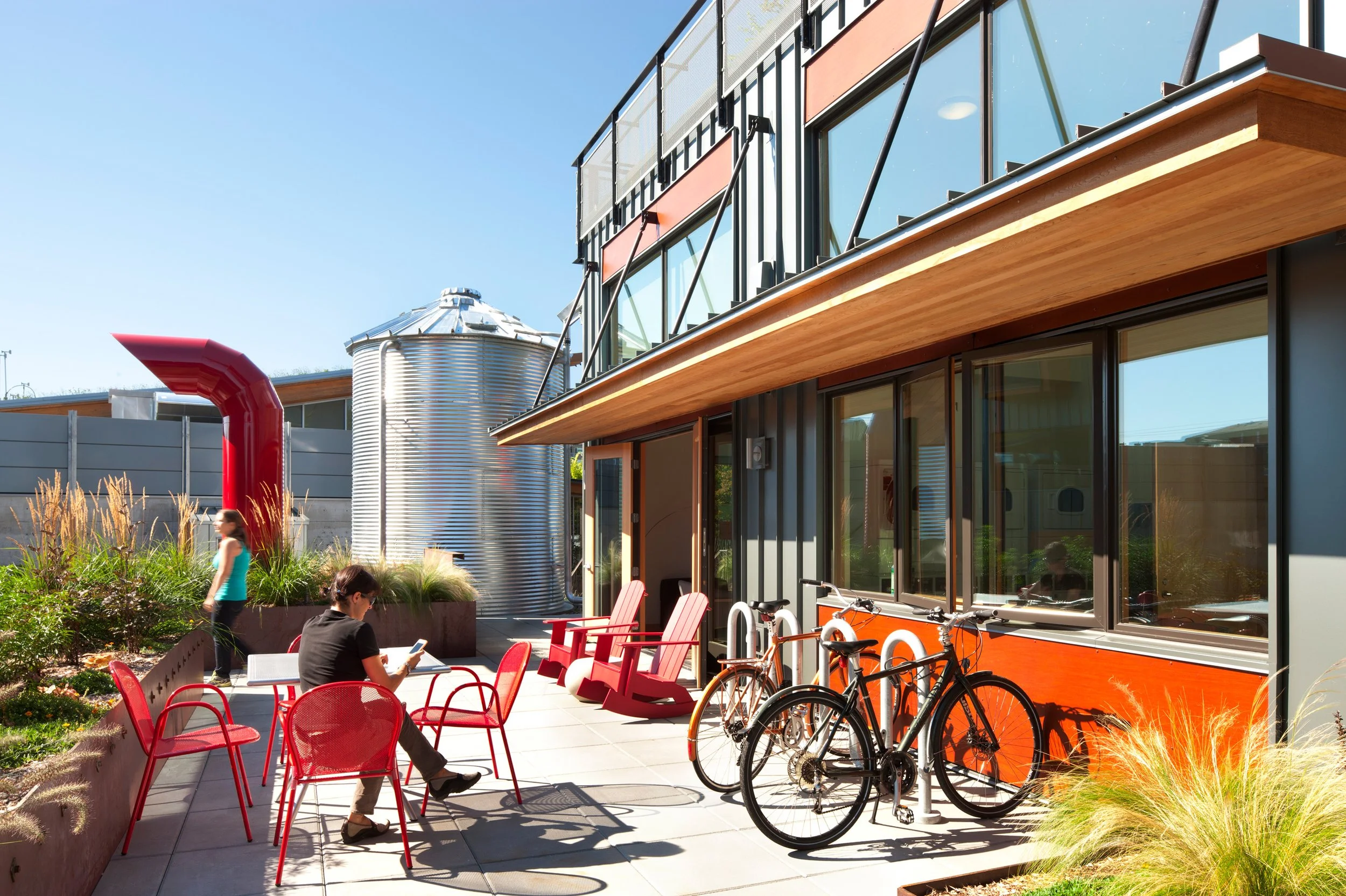
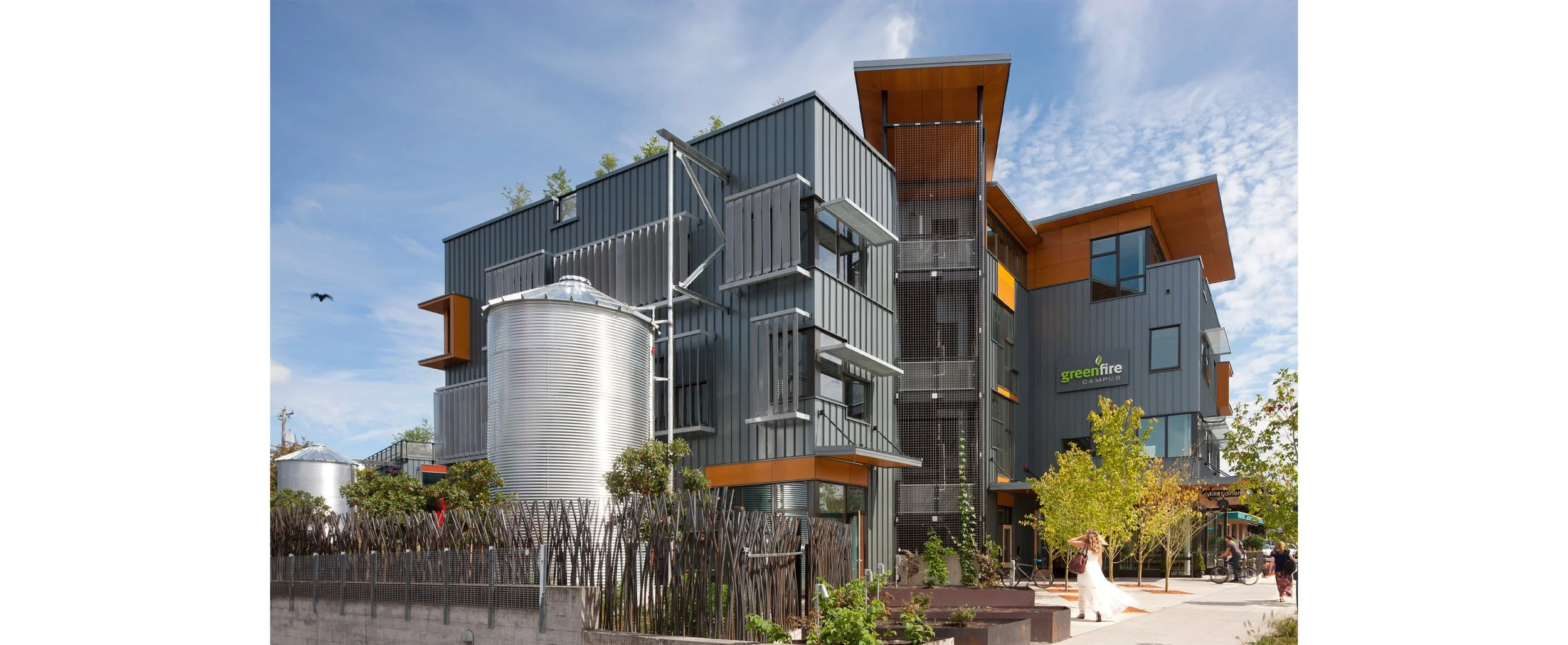
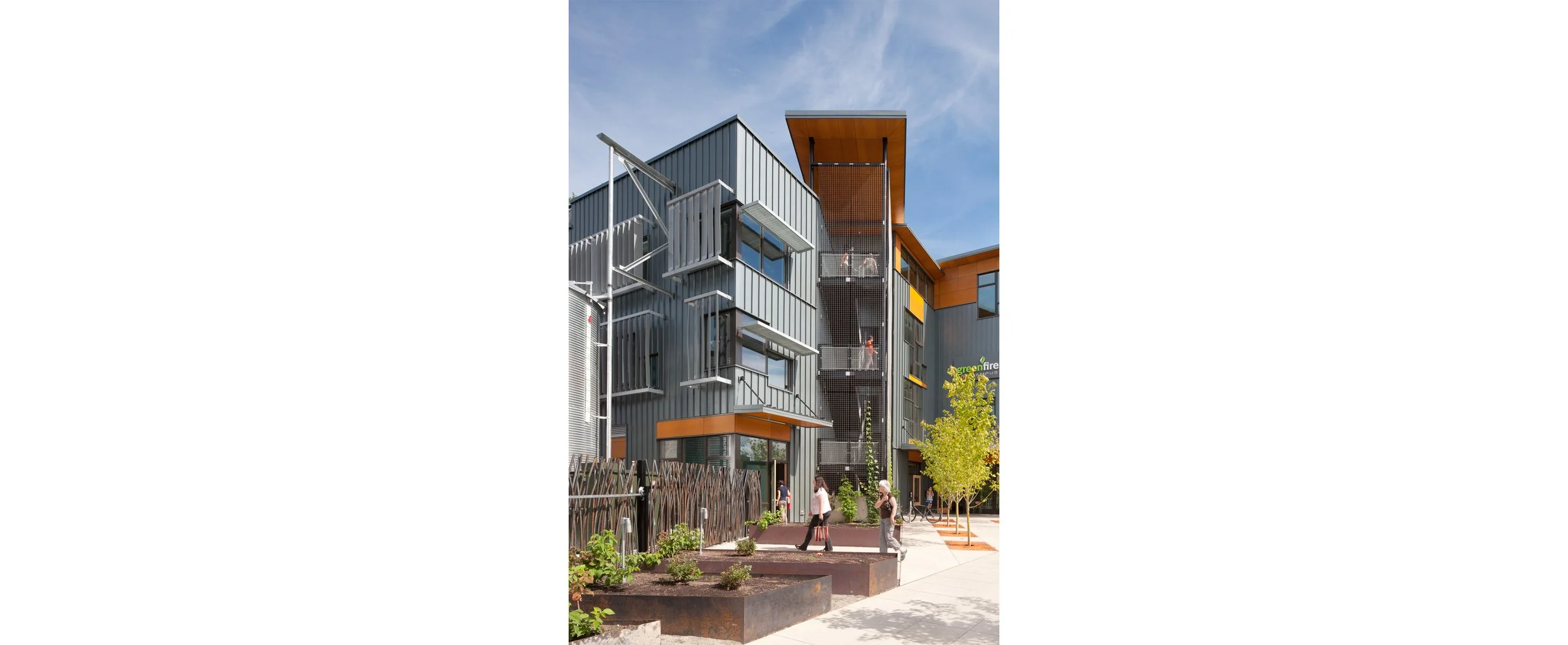
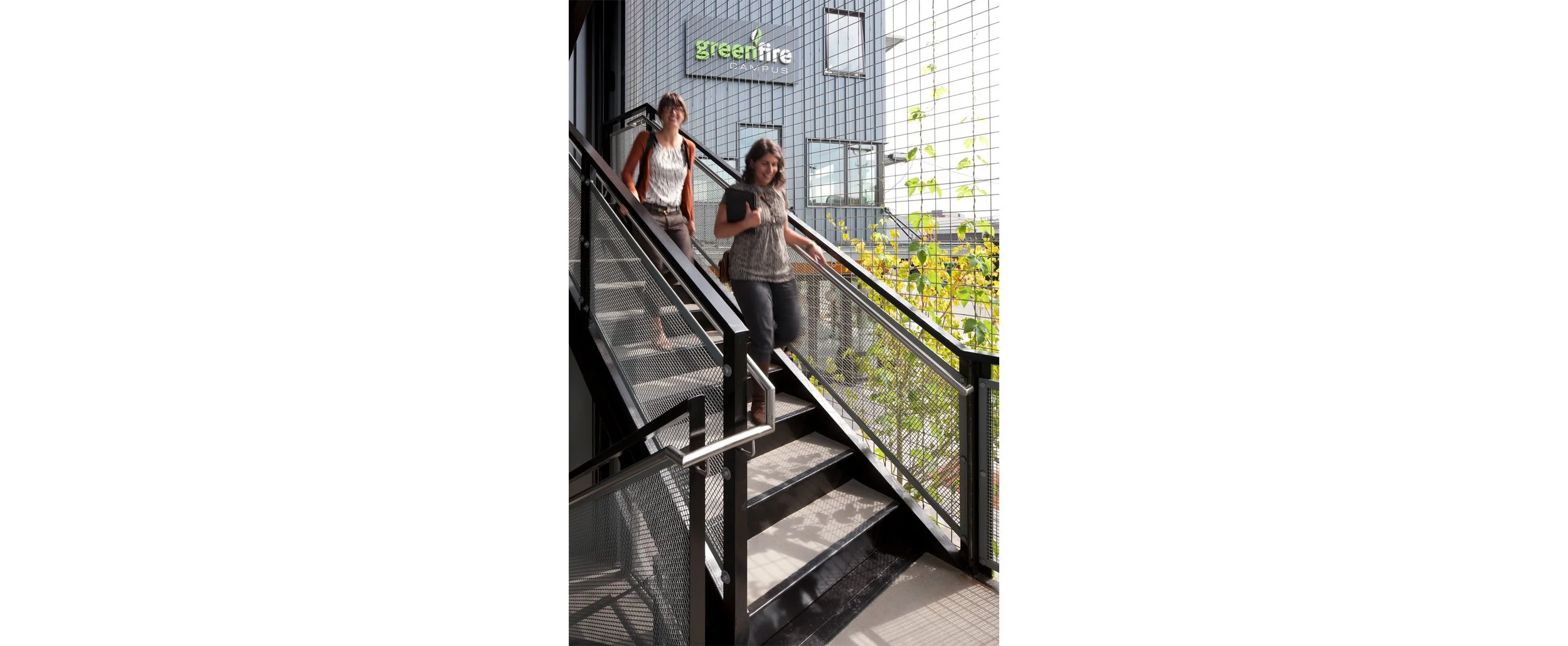
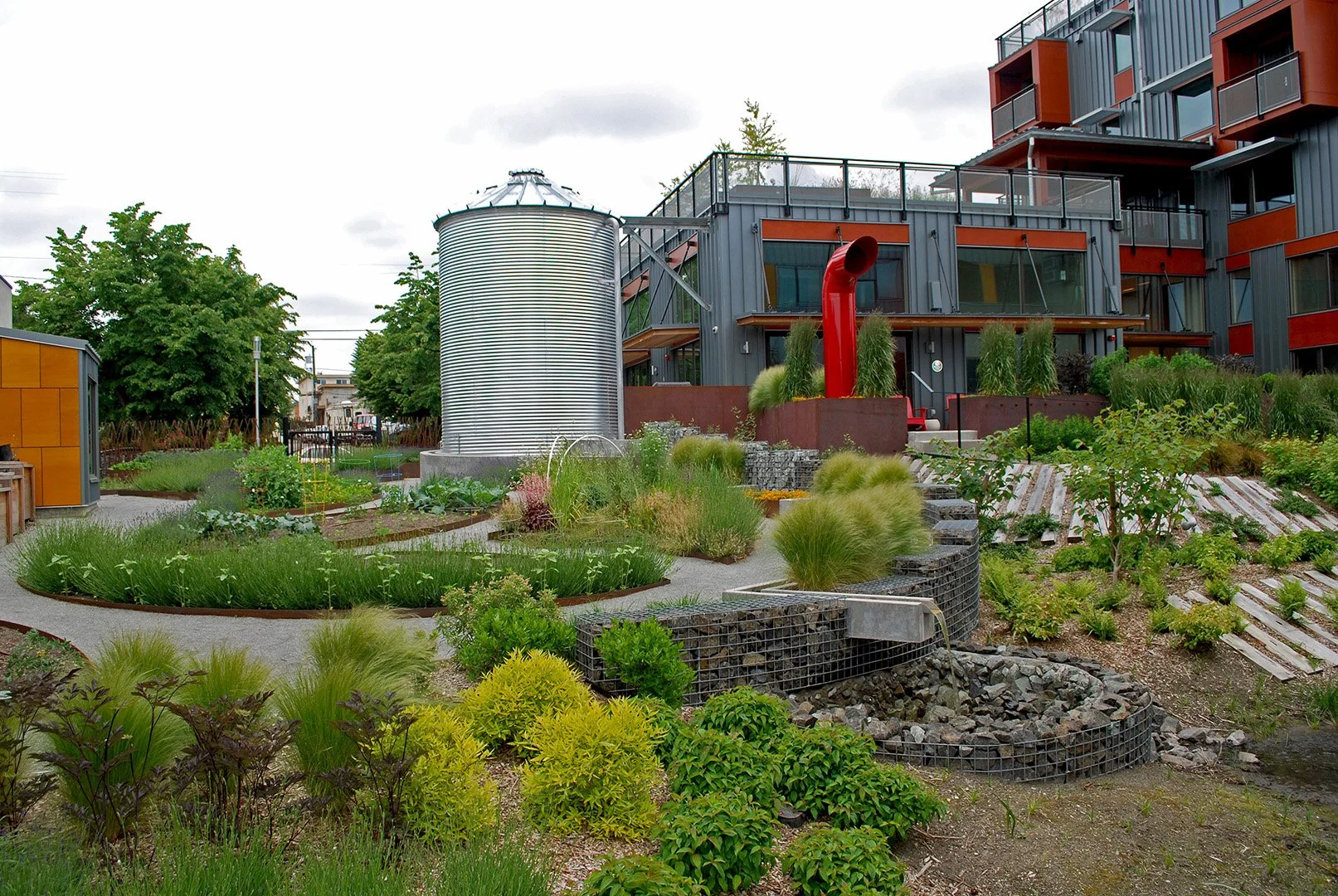
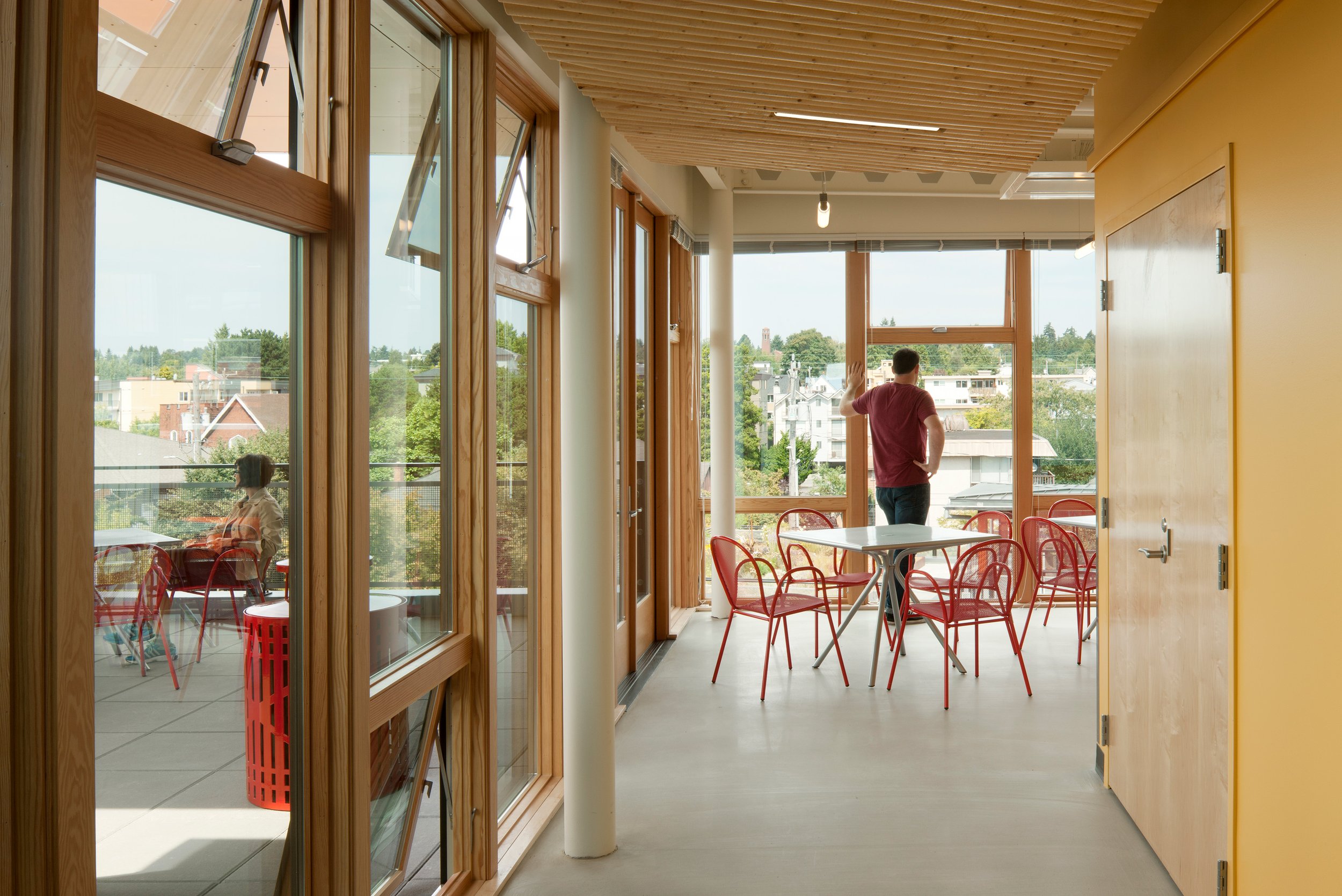
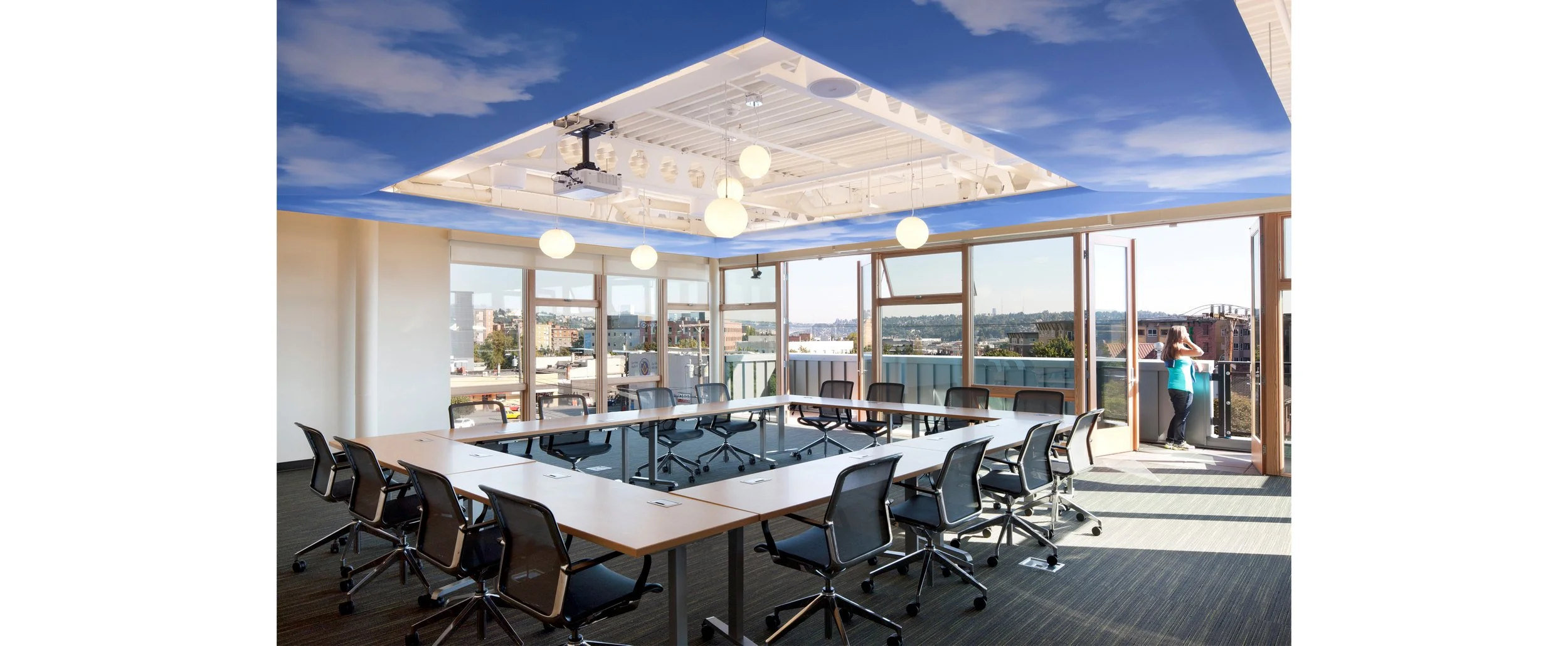

Situated on 0.85 acres alongside the Ballard retail core in Seattle, the GreenFire campus buildings provide apartments, offices, and restaurant space within a landscaped environmental oasis. The campus provides a setting where two seemingly paradoxical environments can coexist: areas where nature can prevail with habitats for flora and fauna; simultaneously, human activities can thrive, with streets, sidewalks and plazas providing the urban experience and promoting social sustainability.

Details
LOCATION Seattle WA
SIZE 30,500 SF
STORIES 5
UNITS 18
COMPLETED 2013
PHOTOGRAPHY Lara Swimmer
AWARDS + RECOGNITION
2017 AIA Seattle Honor Awards / Meeting 2030 Challenge
2016 March, Seattle Weekly
2015 ASHRAE Award
2013 Futurewise Award
2013 KNKX Public Radio
2013 May, Seattle DJC
2013 April, Seattle DJC
2013 February, The Seattle Times
2012 AIA What Makes It Green Award
2012 February, Seattle DJC

Together, the two buildings only occupy 50% of the site, giving over a large area to landscaping. The grounds support urban agriculture and provide a wildlife habitat to connect occupants and visitors to the natural world.
The buildings are clad in vertical metal siding, punctuated by wood and panelized accents, sunshade elements, railings, and balconies. Custom metalwork on the site fencing provides security while blending seamlessly with site plantings.

Sited alongside a rainwater cistern, the apartment building utilizes a single stair layout to maximize living space and minimize circulation. A large amenity gathering space provides the small, 18-unit community with an opportunity to interact with neighbors, as well as a guest suite for visitors to stay. The ground floor units have a two-level loft mezzanine design; the upper four floors feature stair-free flat unit designs.
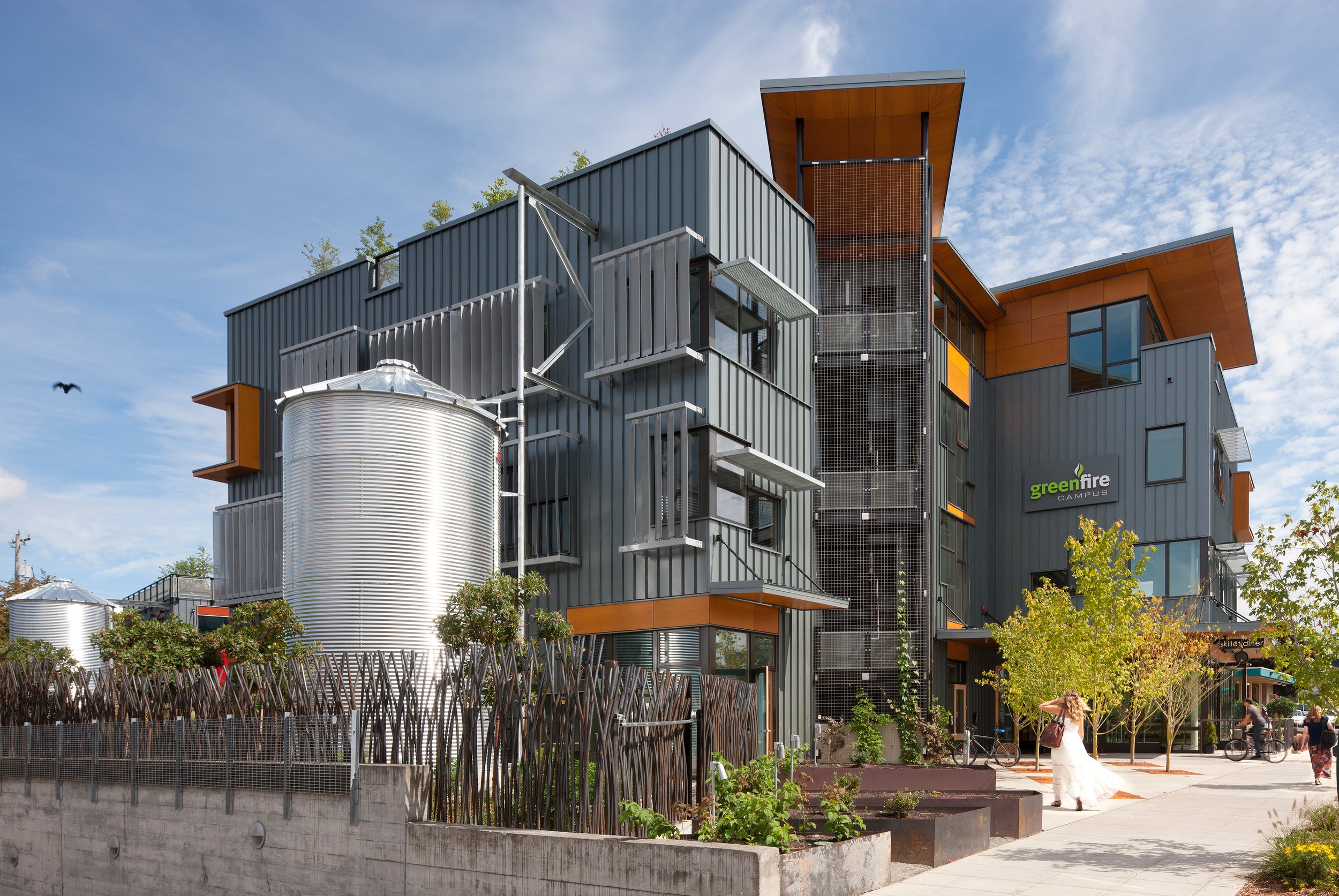

Sustainable solutions include the use of geothermal heating and cooling; the exchange of energy between uses whose needs vary during the day; passive cooling through natural ventilation; provisions for edible horticulture; the use and reintroduction of rain and storm water into the earth with attendant reduction in infrastructure; and solar energy for heating, cooling, daylighting and other electrical needs.
The project used a 20-year proforma in lieu of a typical 7-year one, allowing the team to consider full life cycle costs to make decisions. Overall, the campus was designed to meet the 2030 Challenge, LEED Platinum, and Built Green 5 Star
