
Between Meadow and Mountain
ORIGINALLY APPEARED IN 2025 METHOW HOME, PAGE 39-43 ON MARCH 20, 2025
BY SHELLEY SMITH JONES
In 2005, Meredith and Chase bought a parcel of land located in Phase 2 of Walt Foster's planned development. They chose the Last Chance Road property in Mazama after coming to the Methow for many years to enjoy the plethora of outdoor activities that they loved, such as hiking, cross-country skiing, and camping.
Their dream was to one day build a home on the lovely property and bring the feel of the outdoors into a sustainable abode.
As the saying goes: Life is a river and not a lake. After nearly 20 years of savoring the property in its natural state, life transitions brought Meredith and Chase to the juncture where their dream began to take root. The transition: becoming empty nesters as their youngest child headed off to college in the fall of 2024.
As their ideas of what the house would look like swirled in their heads, they began their search for an architect who could incorporate what was important to them and design a home that not only met their needs but also displayed their passion for sustainability.
Last Chance / Photo by Benj Drummond
Finding an Architect
Last Chance / Photo by Benj Drummond
Chase and Meredith learned of Johnston Architects located locally in Twisp with its main office in Seattle. They were able to view the notable homes in the Methow Valley that Johnston had designed.
Partners in architecture, Ray and Mary Johnston have a long history in the Methow since they were introduced to the valley in the late 1980s by their friend John Crowl. They designed and built John's cabin on the north side of Mill Hill just north of Twisp. They frequently stayed in the cabin when John shifted his attention to a place in Montana, often leaving his cabin vacant.
After a few years of becoming acquainted with the valley from Mazama to French Creek, they purchased property and built what Johnston describes as a "modest box of a cabin." Twenty years after buying their property and 32 years after their first visit, they moved full-time to the Methow.
Johnston said, "Over those years, we became immersed in this place and its culture. Our clients took us up the Chewuch to the ninth hairpin on Uphill Road, to Finley Canyon, Lost River, the reaches of the Twisp River, Studhorse Mountain, the hills of Davis Lake, and the Chechaquo Meadow, not to mention the private pieces of land accessed through the Thurlow Ranch."
Johnston is known for developing an aesthetic that blends inside and outside, deep cultural roots, and innovative thinking in the environment of the Northwest. The firm has produced unique and award-winning results throughout the West and is well-known for working on challenging design problems with great potential.
Chase and Meredith were impressed, not only with Johnston's credentials and many unique projects, but with his passion for the land, honoring with gratitude the first people and their traditional land. Ray understood the desire that Chase and Meredith had to create a house with a small carbon footprint and one that honored the surrounding natural habitat.
The team went to work on developing a design that fit with the homeowners' passion for sustainability and the architects' expertise and commitment to create a sense of timelessness - a feeling of being outside the normal perception of time, where past, present, and future seem to merge.
Last Chance / Photo by Benj Drummond
Finding a Contractor
There are many fine, capable contractors in the Methow Valley.
However, finding one who is not only available for a project, but also matches the thinking of the homeowners can be challenging.
Fortunately, Chase and Meredith were introduced to Chris "Flash" Clark by a mutual friend and immediately knew that by reputation as well as his passion for sustainable building projects, they had found the right master-builder and crafts-man to construct their home.
Clark and his partner Katharine Bill have been in the Methow Valley since 1996 and have been actively involved in sustainable building projects for the past 17 years. Their company - Tall Timber - is best known for using local and salvaged materials whenever possible. Clark and Bill share a passion for buildings that work in the Methow Valley climate.
“When possible, we encourage homeowners to design with maximum energy efficiency in mind, including insulation, solar gain and efficient building design," Clark said.
Clark and Bill strive for "customer satisfaction in every project" and work with homeowners to "translate from imagination to reality in an efficient and perceptive way."
Music to the ears of Chase and Meredith.
Last Chance / Photo by Benj Drummond
The Land
Chase and Meredith met while studying geology in college and, therefore, were intrigued by the geological components of their Last Chance property. They hoped to utilize as much of the natural beauty in their indoor and outdoor design. as possible.
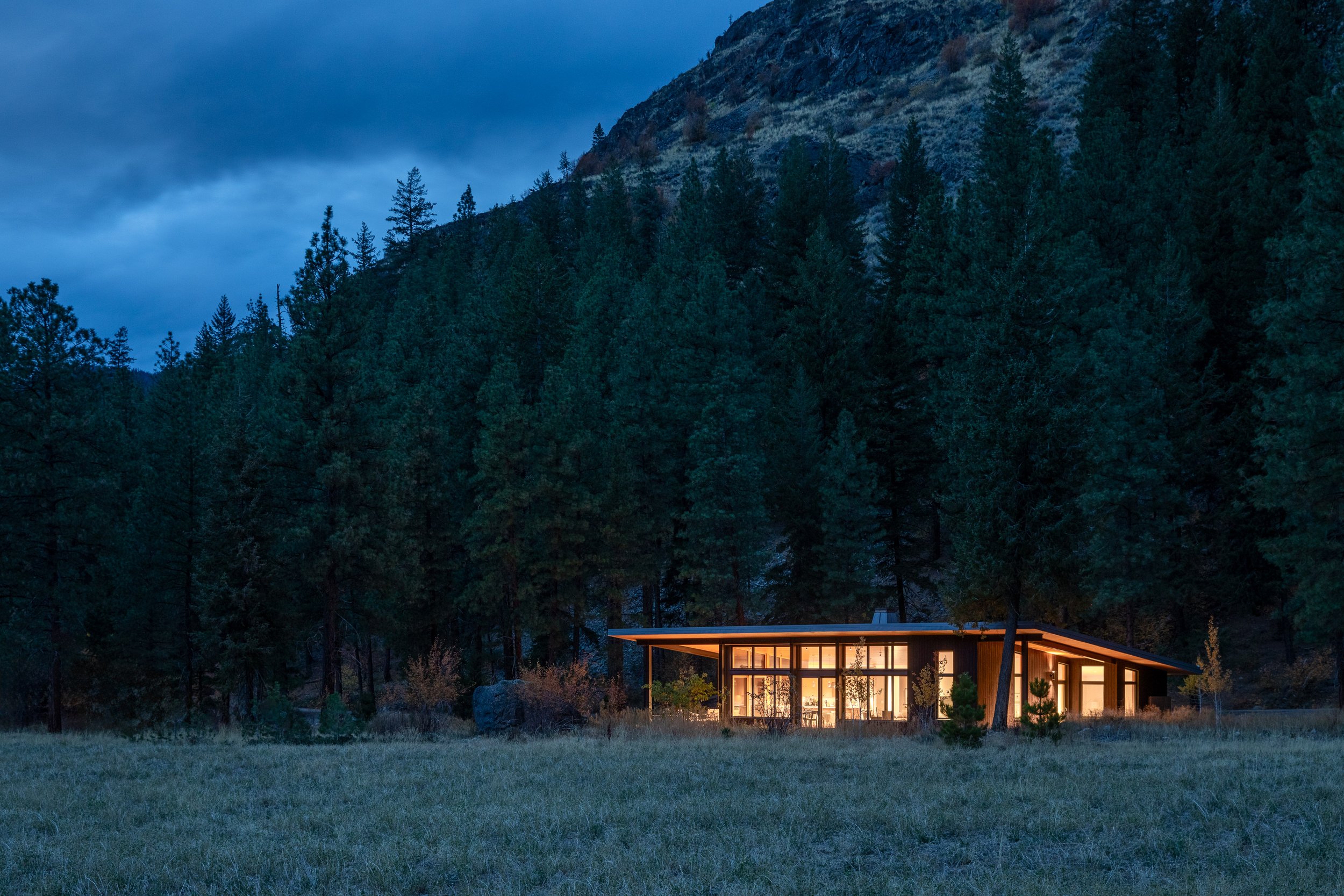
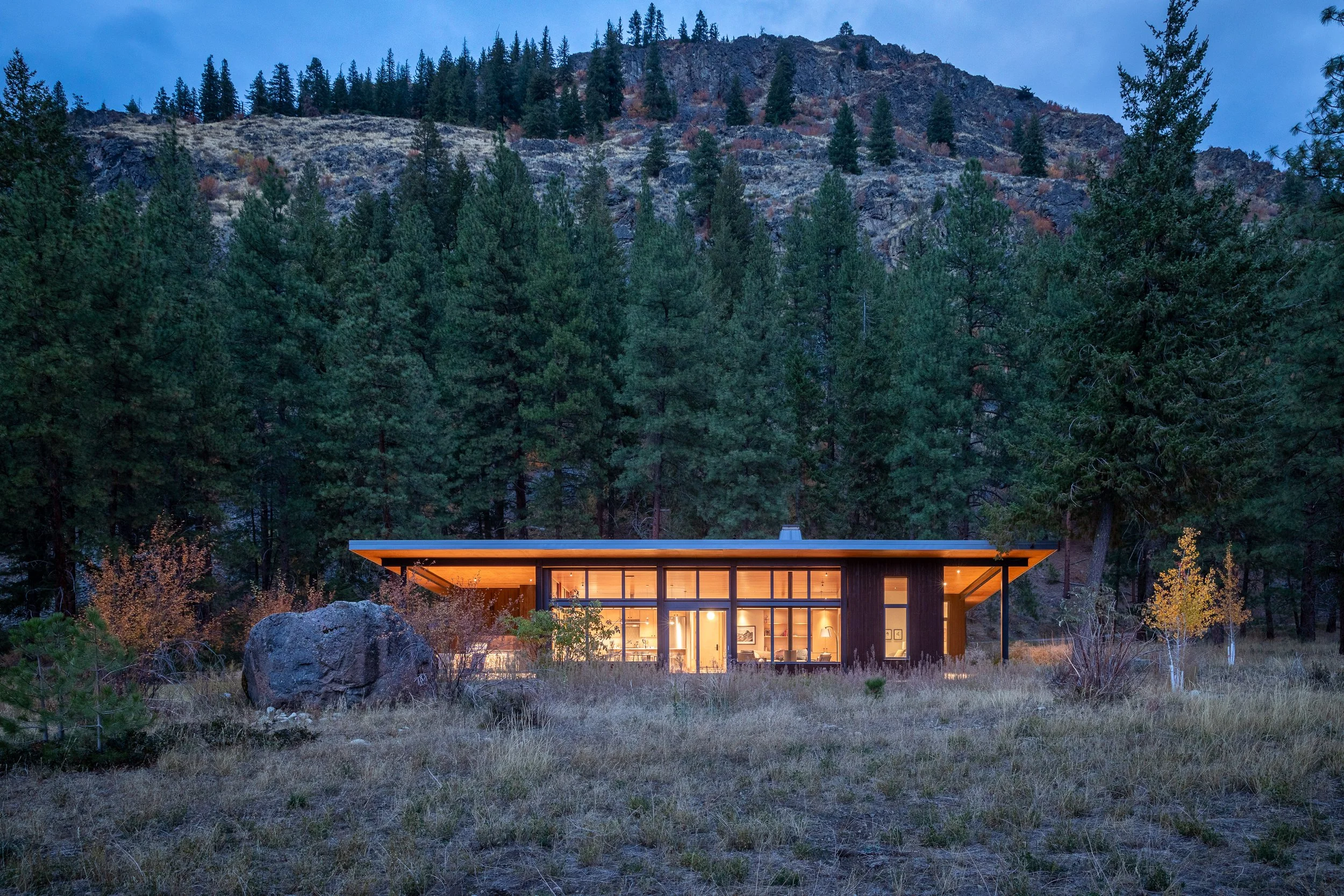
The primary influencer of the plot that would become the site of the home was the rock mountainside standing tall behind the property. With a history of unleashing gigantic boulders - though not recently - a house at the base of the rock face would be best protected with its own solid wall.
Thus, the plan for the garage and back side of the house included a concrete apron to provide added protection against any boulder that might break loose and tumble to the valley floor.
One such boulder - long since situated in front of the building footprint-was integrated into the natural landscaping design. Sitting steadfast in full view of the panoramic scene across the southern facing window wall, the huge rock is a constant reminder of the power of nature, demanding respect.
Energy Star Certified triple-pane windows expanding across the front of the house, bring the natural elements of the landscape and weather inside regardless of season. The alfalfa field leaves an unobstructed view across the narrow upper valley, bumping into Sandy Butte to the south.
Whether watching the snow fly, the leaves changing color, hay being the leaves changing color, hay bein baled, or trail users skiing, biking, walking, or horseback riding, the view across the magnificent land is possibly the single most important aspect to Chase and Meredith.
Last Chance / Photo by Benj Drummond
Firewise and Climate Elements
Given the risk of wildfire in the wildland urban interface, the homeowners, architect and builder were all cognizant of the need to protect the home as best as possible from the potential ravages of fire. Hoping to minimize to the number of trees taken down, Chase and Meredith chose wisely the pine trees most likely to be problematic and, when possible, had the lumber milled to use in outdoor projects such as the outdoor shower.
Cathy Habermehl of Windy Valley Landscaping - with her extensive experience and knowledge of plant varieties that perform well in the North Central region of Washington - helped Chase and Meredith create a design around the house that would be fire and deer resistant. She utilized as many natural aspects of the land as possible to create a low-maintenance outside environment.
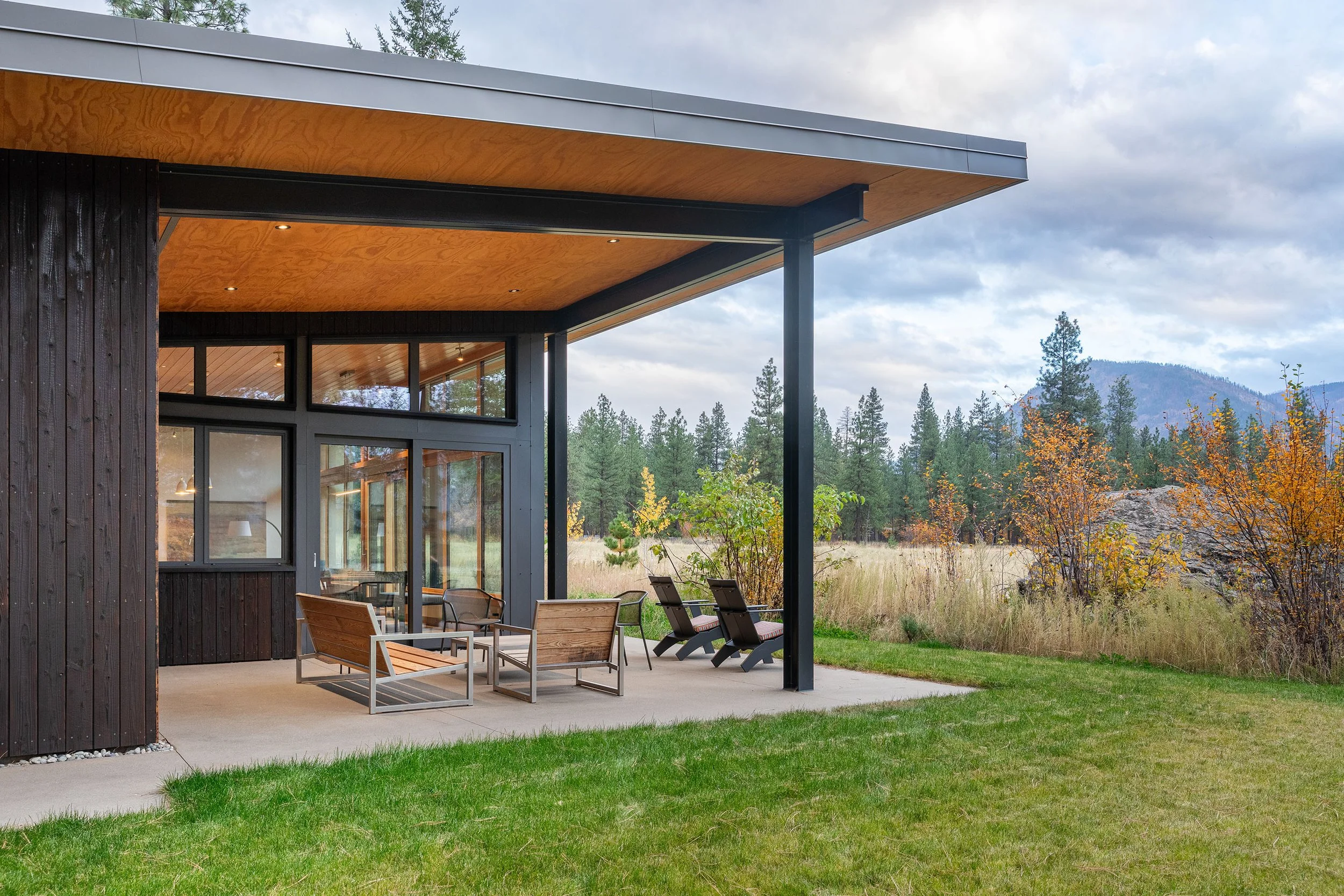
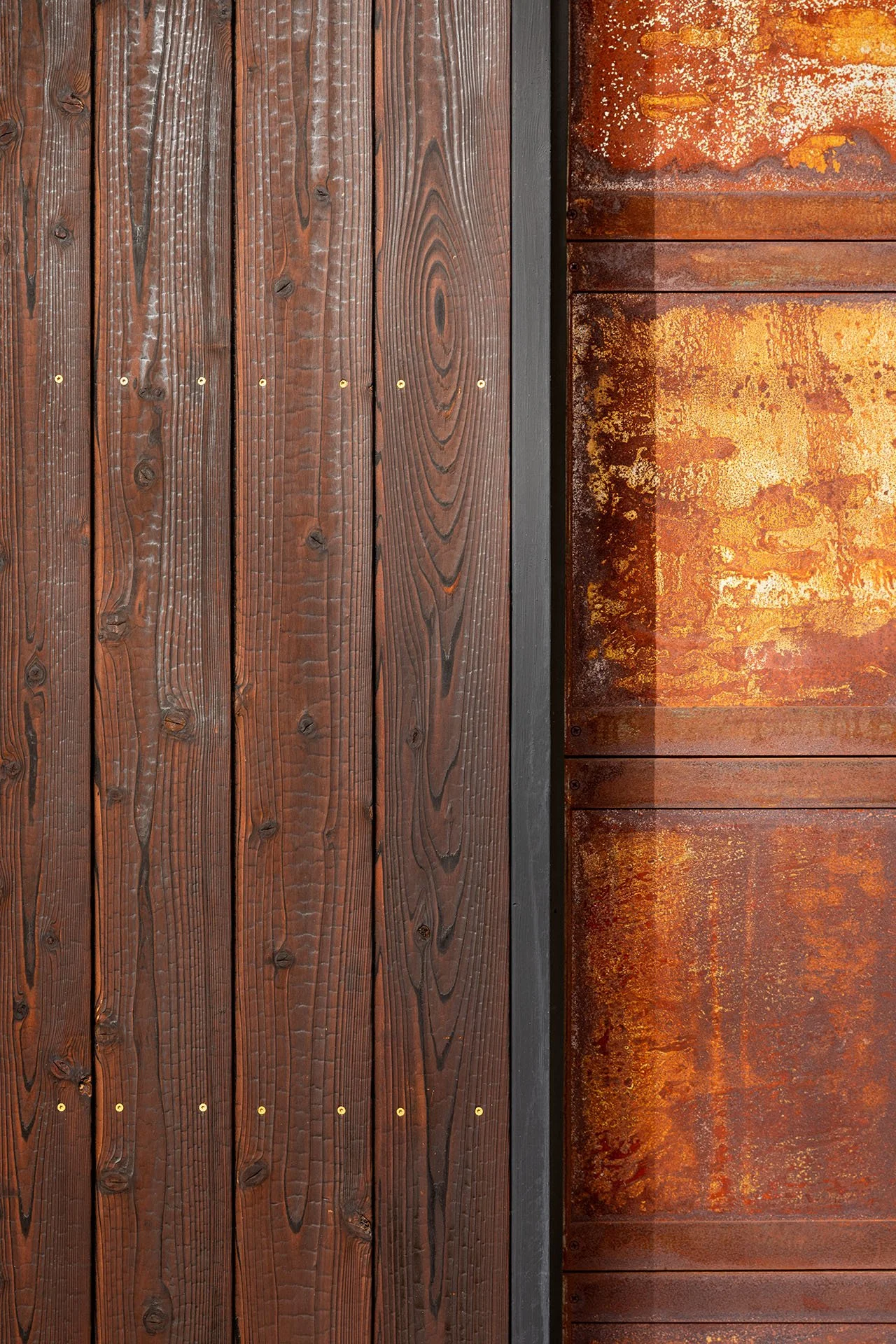
Another fire-resistant aspect of the build was to use ship lap Shou Sugi Ban materials above the concrete apron. Shou Sugi Ban is an environmentally friendly way to preserve timber through charring, which paradoxically, makes it fire-resistant. The charred appearance highlights the natural wood veining and creates textural interest. Paired with weathering steel, the home exterior is sturdy, fire-resistant, and pleasing to the eye.
To accommodate Mazama's prolific snowfall, steel support beams and a shed roof were a necessary part of the build to withstand a heavy load. Solar panels make use of the sunny southern exposure of the upper valley for energy efficiency.
Northwest Modern Interior
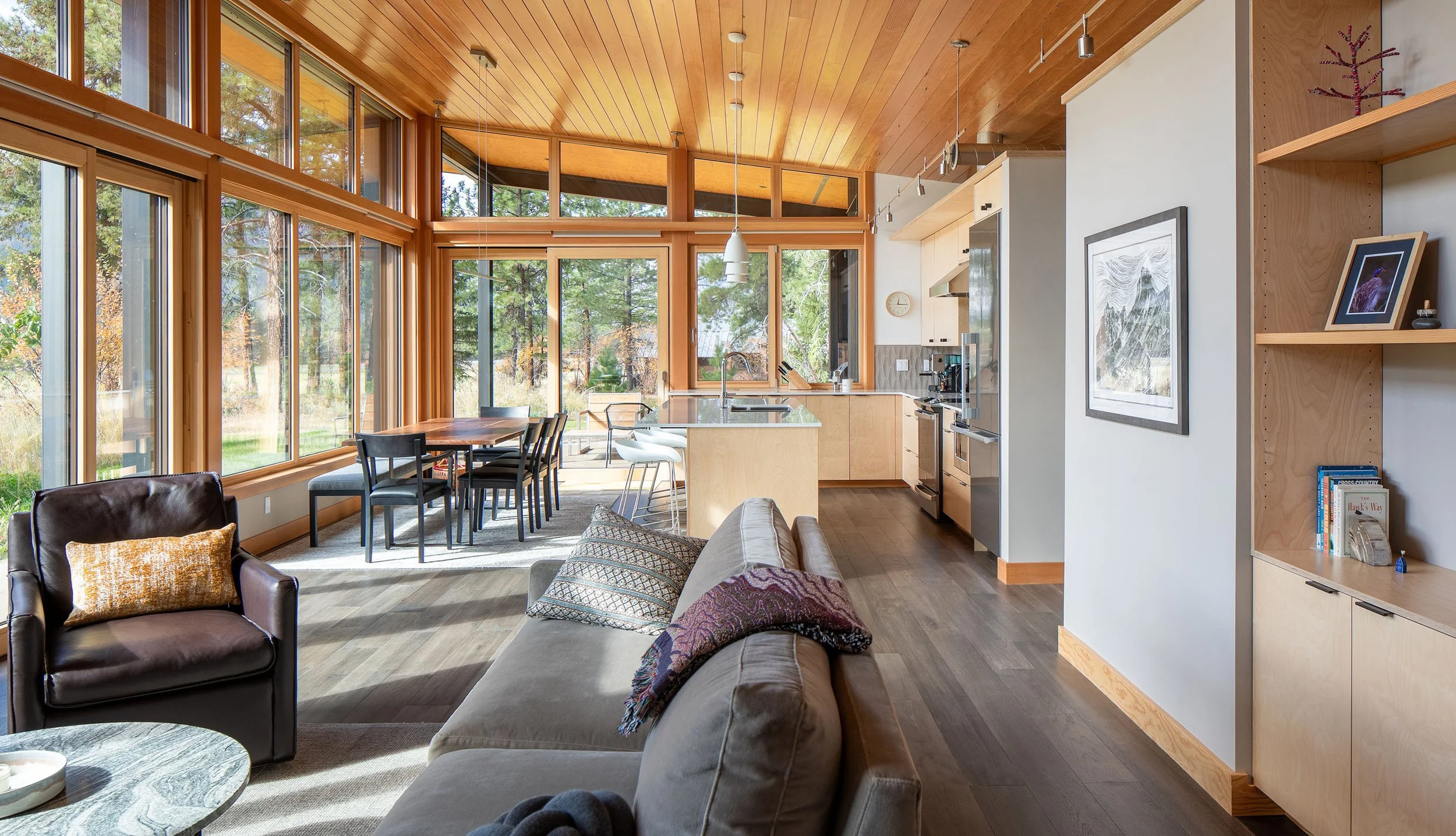
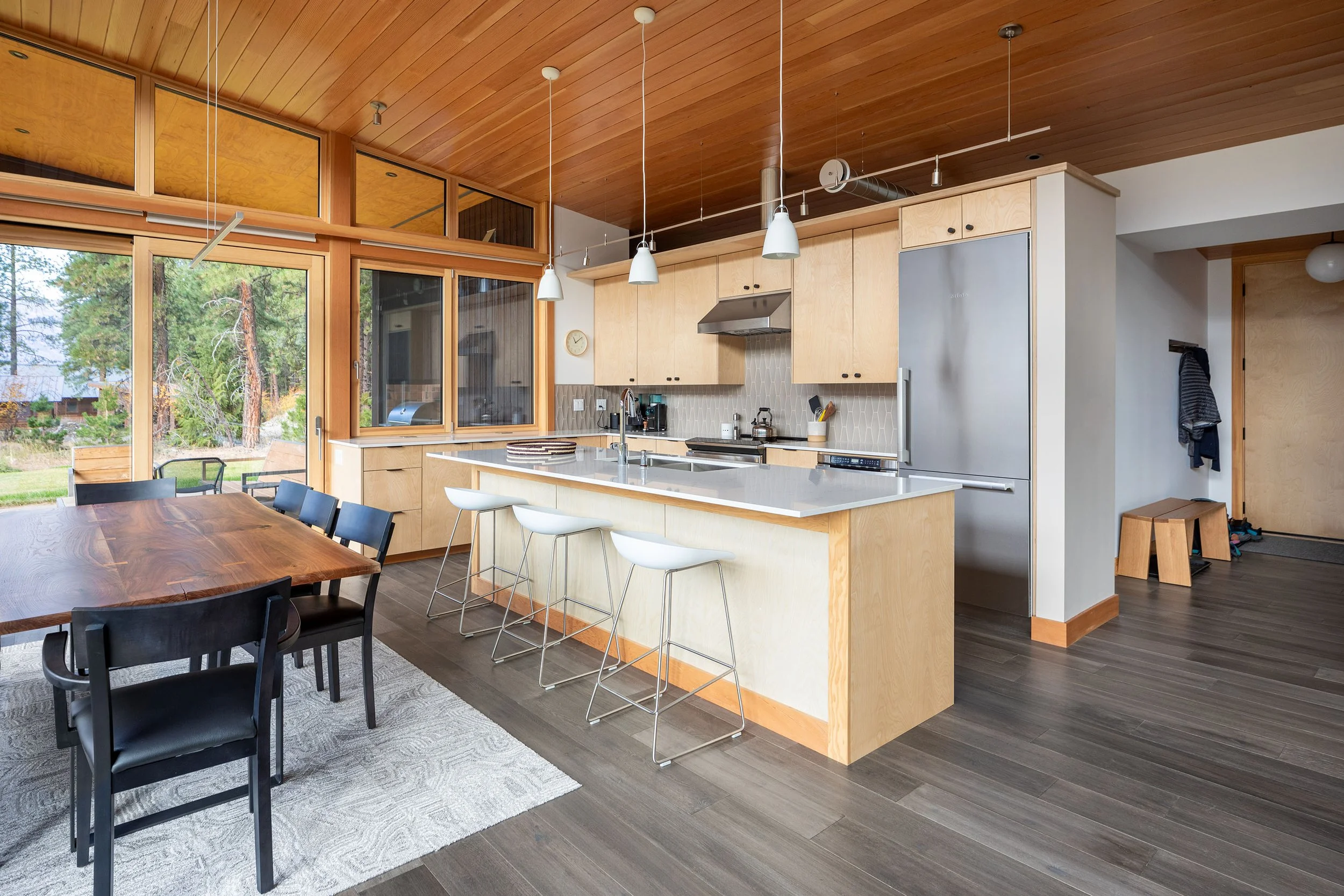
Johnston describes his design of this 1,800-square foot house as Northwest Modern. The lines are clean. The colors are neutral. The floor plan is sleek. Taking advantage of a comfortable flow, each square foot of the home is welcoming and utilitarian. Bright natural light fills the gathering spaces in the front of the house, while the smaller bedrooms are tucked in the back, "cozy to the mountain" as described by Meredith.
A bonus room that Johnston builds into his houses he calls a "nest room." Usually 8 by 12 or 8 by 14 feet, the room has been decorated with different uses in mind by his clients. Chase and Meredith have chosen to use the room for a TV room that also offers a sleeping area for overflow guests.
Last Chance / Photo by Benj Drummond
Added to the design is the incorporation of sustainable materials. The engineered hardwood floors top the heated concrete, providing a softer step for the feet. Bill McAdow of Harmony House in Twisp - with over 15 years of experience in the flooring and window covering industry - was instrumental in helping the homeowners choose the correct flooring for their application.
Following both Flash Clark's and the homeowners' passions, Forest Stewardship Council (FSC) certified wood was used to highlight the interior - such as the vertical grain fir lined ceilings of the shed roof.
The countertops are engineered quartz atop lustrous light wood cabinets custom built by Will Ford, all adding a subtle charm to the modern kitchen. Drew Johnson of Rhombus Tile and Stone completed the complementary geometric tile work.
To meet the desires of Chase and Meredith to bring the outside to the inside, an outdoor kitchen is accessible from the user-friendly indoor kitchen, making it possible to eat in the warm light indoors or outdoors when wasps, flies, gnats, and other pests (part of living in the Methow) are not present.
In describing the three-bedroom, two-bath home, Meredith said, "The house is great for two or four people and can squeeze in eight with its flexibility. It's a great gathering space for family - not big, good for two, but enough room for more."