
Twisp Cabin Featured in Tiny Homes Magazin
ORIGINALLY APPEARED IN TINY HOMES MAGAZINE
BY JOHN RIHA
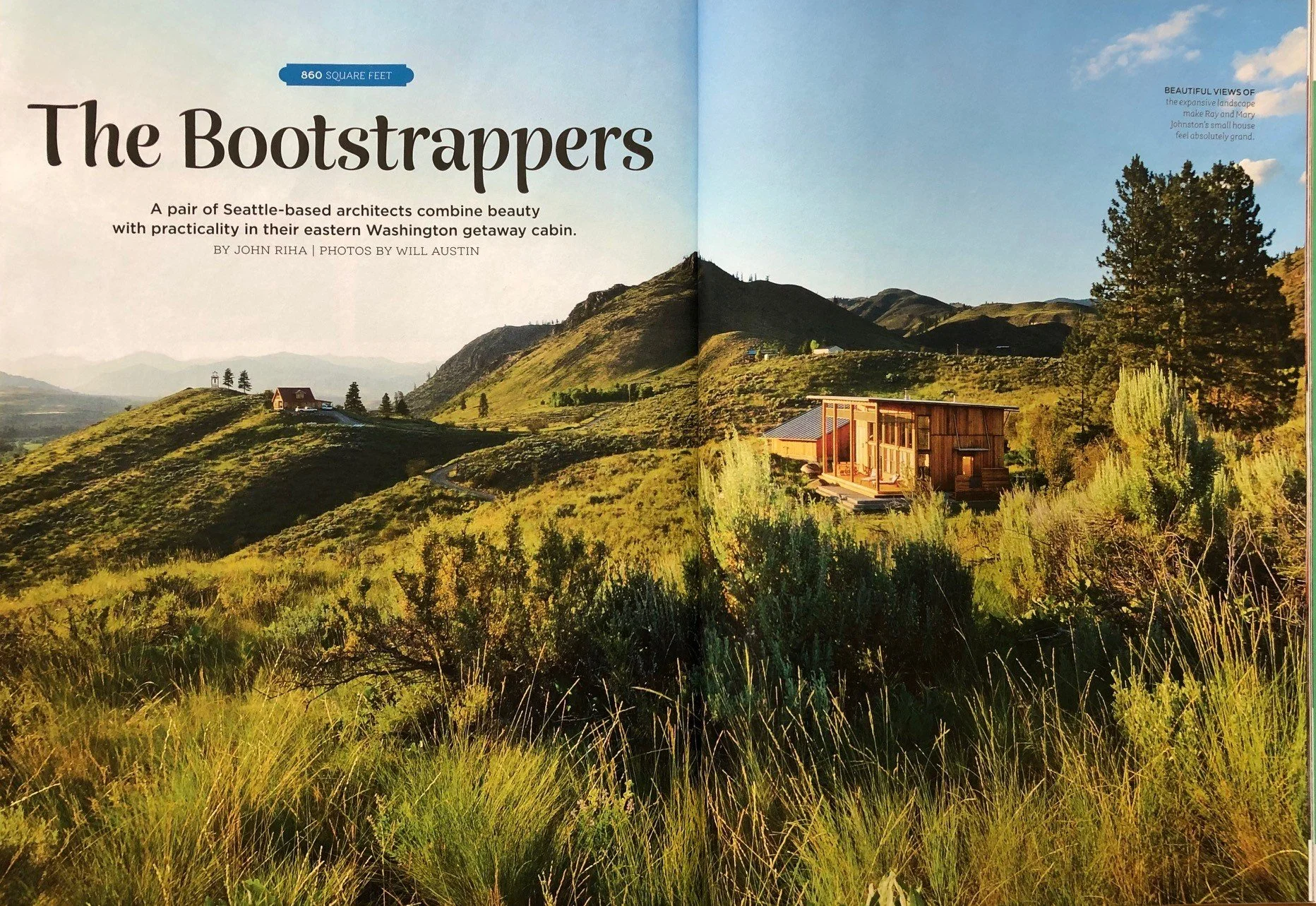
Mary and Ray Johnston, founding partners of their Seattle design firm. Johnston Architects, first became acquainted with the Methow Valley in Washington state years ago when they stayed on some land owned by a friend and client. They became enchanted with the area’s sprawling mountain and clean, clear rivers, and decided that one day they’d build a cabin there.
Eventually, they bought a piece of land with a spectacular view, but they didn’t jump into building something right away. They couldn’t -- they were keeping a close eye on finances, and a new house just wasn’t in the budget.
“We really bootstrapped everything back then,” says Ray. “ We bought a beat-up old Airstream and set it on the site so we could visit and think about things. And we though about things for quite a while.”
That contemplative interlude would be to their benefit. as they got to know the property “in all seasons and all times of day,” notes Ray. That knowledge helped them make a confident choice for a building site, an area tucked up against a copse of pines with big views of the Cascade Mountains and the Methow River windidng its way below.
When the couple did begin to draw and build, they remained mindful of economy. Construction proceeded step-by-step, with site prep, foundation work and framing moving ahead whenever they had a little extra cash.
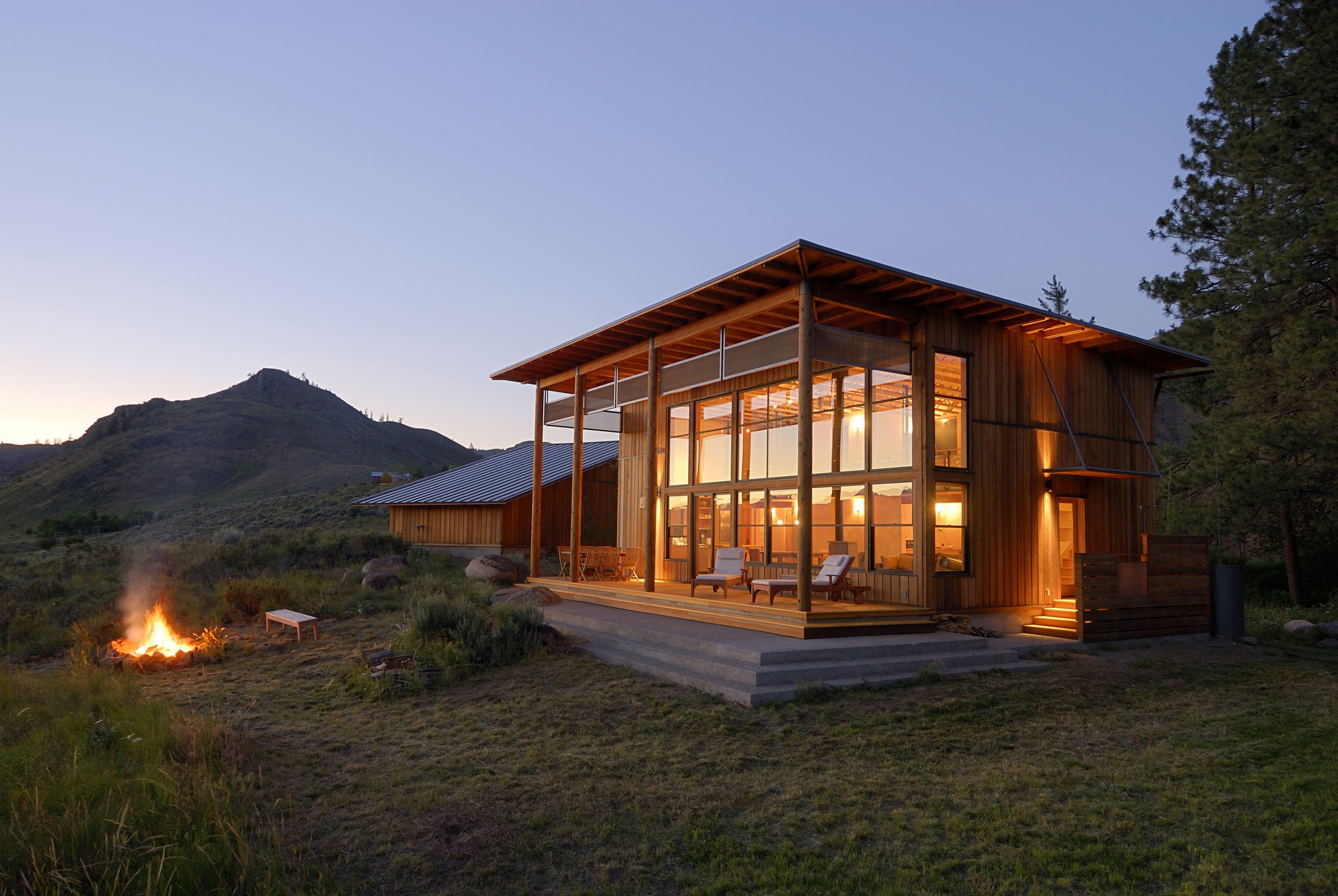
Photo by Will Austin
The basic design evolved to just over 800 square feet, using the most cost-effective shape — a large rectangle with a nearly flat shed roof. Inside, a soaring ceiling rises over 16 feet and adds a sense of volume and expanse, and a wall of floor-to-ceiling windows open up to the views beyond and add to the feeling of being in a much larger space.
Working within the modest footprint, the architect duo strategized how to maximize what space they had.
”We envisioned having people here, friends and family, so we tried to strike a balance between keeping things small but at the same time making spaces where people can hang out,” says Mary. They didn’t necessarily have to be rooms with doors, but more like alcoves where you can be alone or get a little work done.”
Case in point is the “master bedroom,” an 8x8 foot space on the first level that’s tucked away behind a sliding door. The couple also took advantage of the high ceiling to add a loft with two small upstairs bedrooms and a bathroom.
”Our first holiday season we had nine people here,” says Mary, “and we made it all work. That was a memorable holiday!”
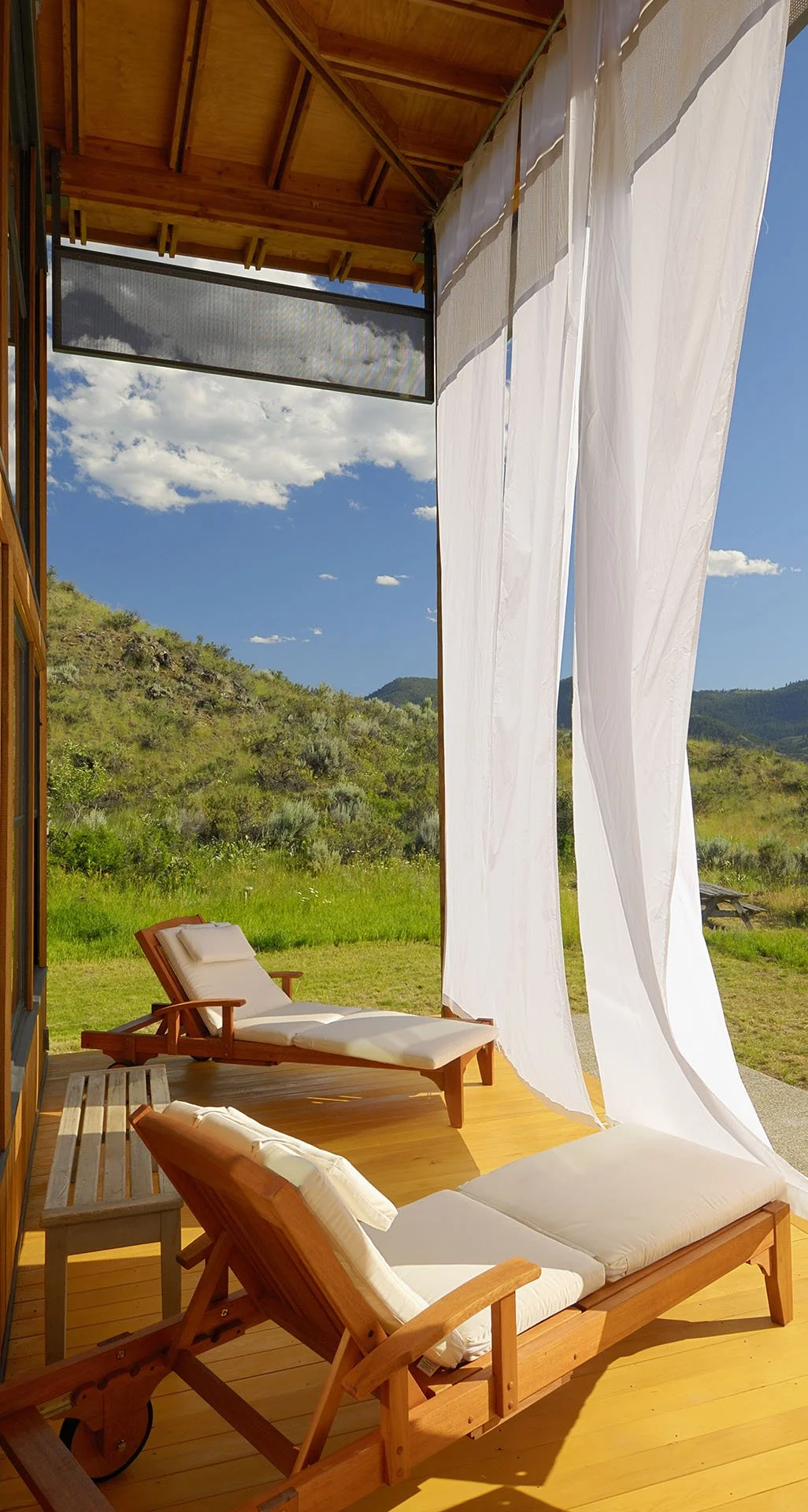
Photo by Will Austin
All during the process, value engineering was a constant mantra. “This became like a little laboratory for using inexpensive materials that you wouldn’t necessarily see in other residences,” says Mary. “Things we could develop and show clients at a later time.” They used inexpensive bamboo-faced plywood to cover interior walls, and stainless steel mesh to create a railing system for the loft. Rather than cover the roof trusses, they left them exposed, cantilevering them 12 feet beyond the exterior wall to create a large covered front porch — another way to include inexpensive space.
Outside, small vegetable gardens beckon during the growing season. “We really enjoy the gardnes,” says Mary. “When you have a small house, if you can extend your living area into a garden and spend time hanging our there, it makes everything live a lot larger.”
With their getaway house well-established, Ray and Mary fully enjoy splitting their time between the big city and the idyllic charms of the Methow Valley.
”We’ve designed a lot of houses over the years,” says Ray, “but this is one we got to live in and I love it. I love having people over and when they’r ehere, they’re delighted. It changes their view on what small house can be.”
Adds Mary, “I enjoy the discipline we used out of necessity to create this house. It made us see our designs as flexible and sort of timeless. It doesn’t bother me at all how small it is, we’re just so used to it. It just seems perfect.”