
Firewise Mountain Architecture
BY RAY JOHNSTON
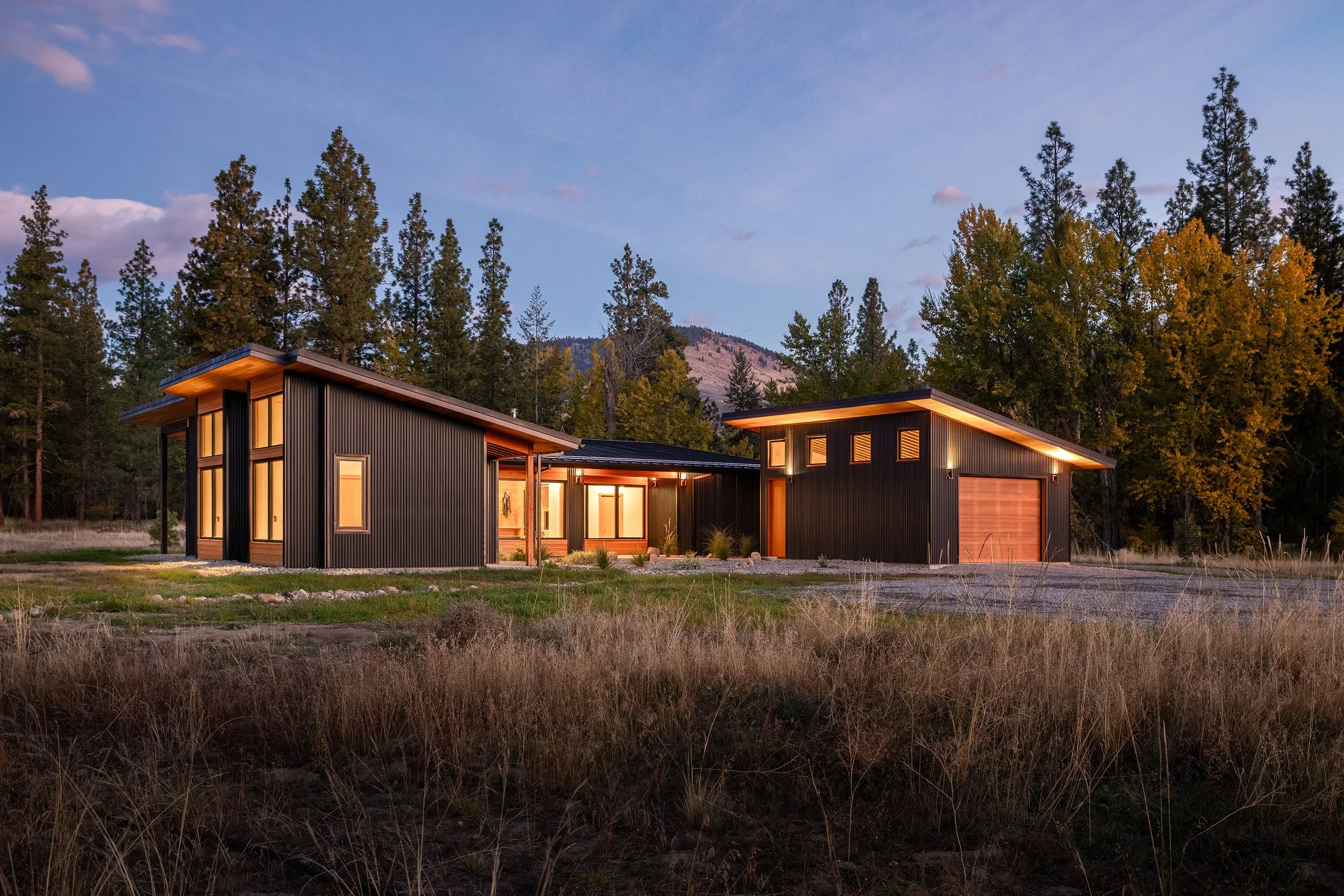
Holly House / Photo by Benj Drummond
As the Wilderness Urban Interface shifts towards our wild natural environments, the threat of wildfire to our built environment increases.
Climate change is hastening this danger, bringing drier, warmer conditions to mountain regions throughout the West. For example, this year alone, the Cascade Mountains saw snow accumulations at or below 80% of normal, while an early, dry spring left the landscape even more vulnerable. The east slope of the Cascades has witnessed massive fires over the past decade—events that have shaped community awareness and led many regional jurisdictions to adopt “Firewise” building codes.
What is Firewise? There are a variety of ways that fire threatens structures. Wind-driven flames travel fast and can engulf a building with little warning. Explosive ignition of evergreen trees combined with strong wind can send embers hundreds of yards away from the main body of a fire. When these embers ignite dry grasses or shrubs near buildings, flammable siding can burst into flame. Should embers drift into open deck structures or roof vents, these structures can be consumed rapidly. Firewise is the strategic design of sites and buildings to minimize the potential impact of wildfire.
Careful site design can be an effective measure in the defense against fire. Kittitas County suggests a 30-foot buffer around new structures. The buffer zone should not contain large trees with branches close to the ground. Ideally, ground cover near exterior walls consists of gravel or irrigated lawn. Irrigation in these situations can extend outward to maintain a moist landscape. If this is not possible, a xeriscape consisting of gravel and rock can be an effective deterrent.
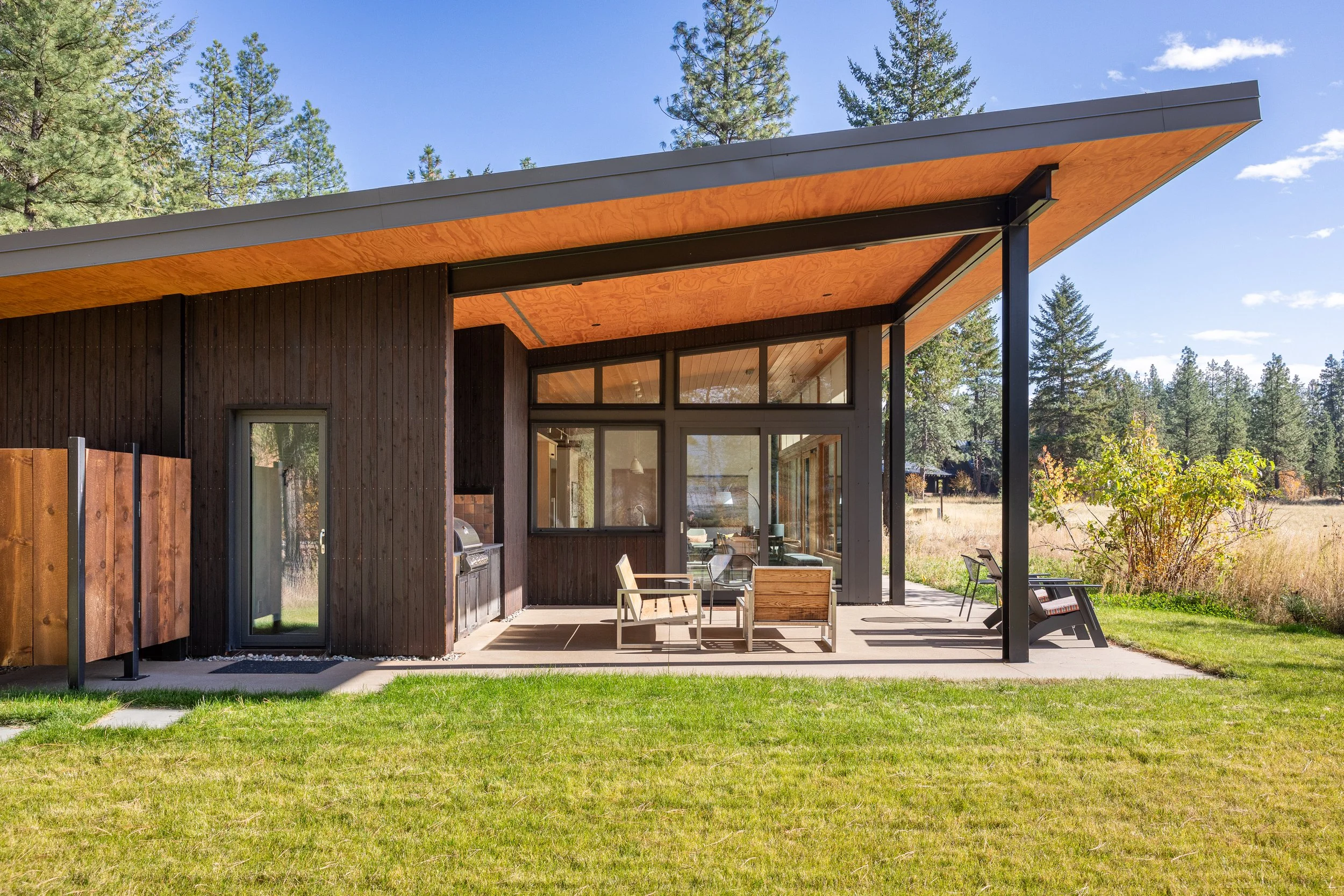
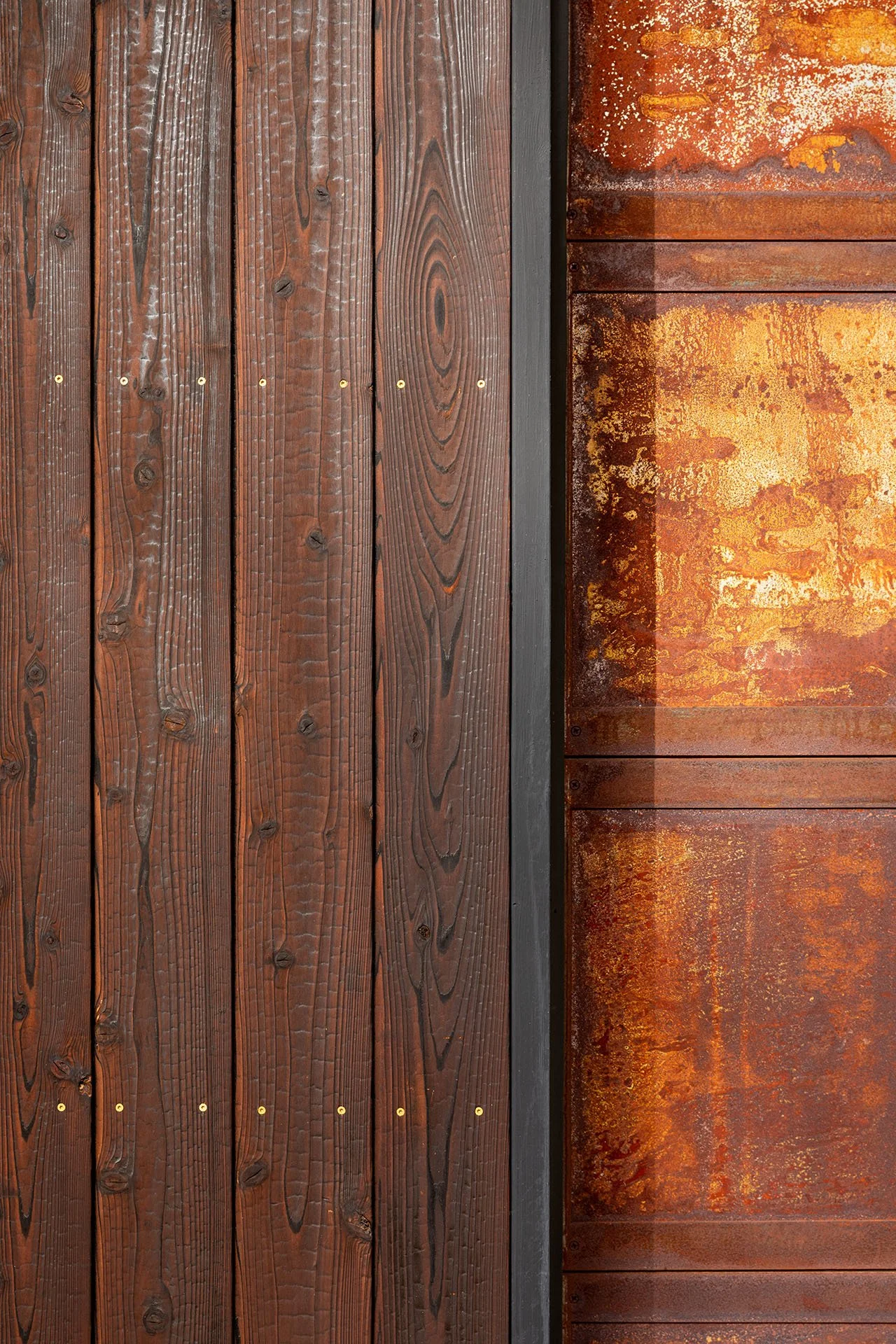
Last Chance / Photo by Benj Drummond
In the Northwest, wood siding is seen as a “go-to” solution. In earlier decades, designers would add rooftop sprinklers to keep wood buildings damp during fire conditions. However wind wind-driven fire suggests stronger strategies. Where wood siding is desirable, intumescent stains can be applied to the wood. These modern materials react to fire-generated heat by expanding to create a fire-resistant foam that protects more flammable surfaces from approaching flames.
Roofing is another potential for fire defense. While fire-treated wood shingles are available, a more durable and stronger material treatment is preferred. Steel, clay tile, and stone are all fire-resistant roof materials and defend well against drifting embers.
The same logic can apply to walls. Metal panels, cement board, or stone can be effective against fire. These materials also minimize maintenance and can provide a handsome expression while maximizing fire defense.
Some areas suggest more extreme measures. An architect in California built roofs to hold 6” of water during fire season. Automated fire shutters in one house close with the advent of significant heat. Other cultures build with non-combustible materials throughout, such as concrete.
In addition to construction techniques that resist fire, summer comes with smoke and significant degradation of air quality. To address this new reality, the installation of ventilation systems that include MERV 13 or HEPA filters can help to maintain habitable conditions during rough times.
Ultimately, thoughtful, Firewise architecture is about coexisting more safely with both the natural landscape and our changing climate. Through smart design and resilient material choices, we can build mountain homes that are safer, healthier, and better adapted to the realities of wildfire risk.