
Universal Design and Age Friendly Architecture
BY RAY JOHNSTON
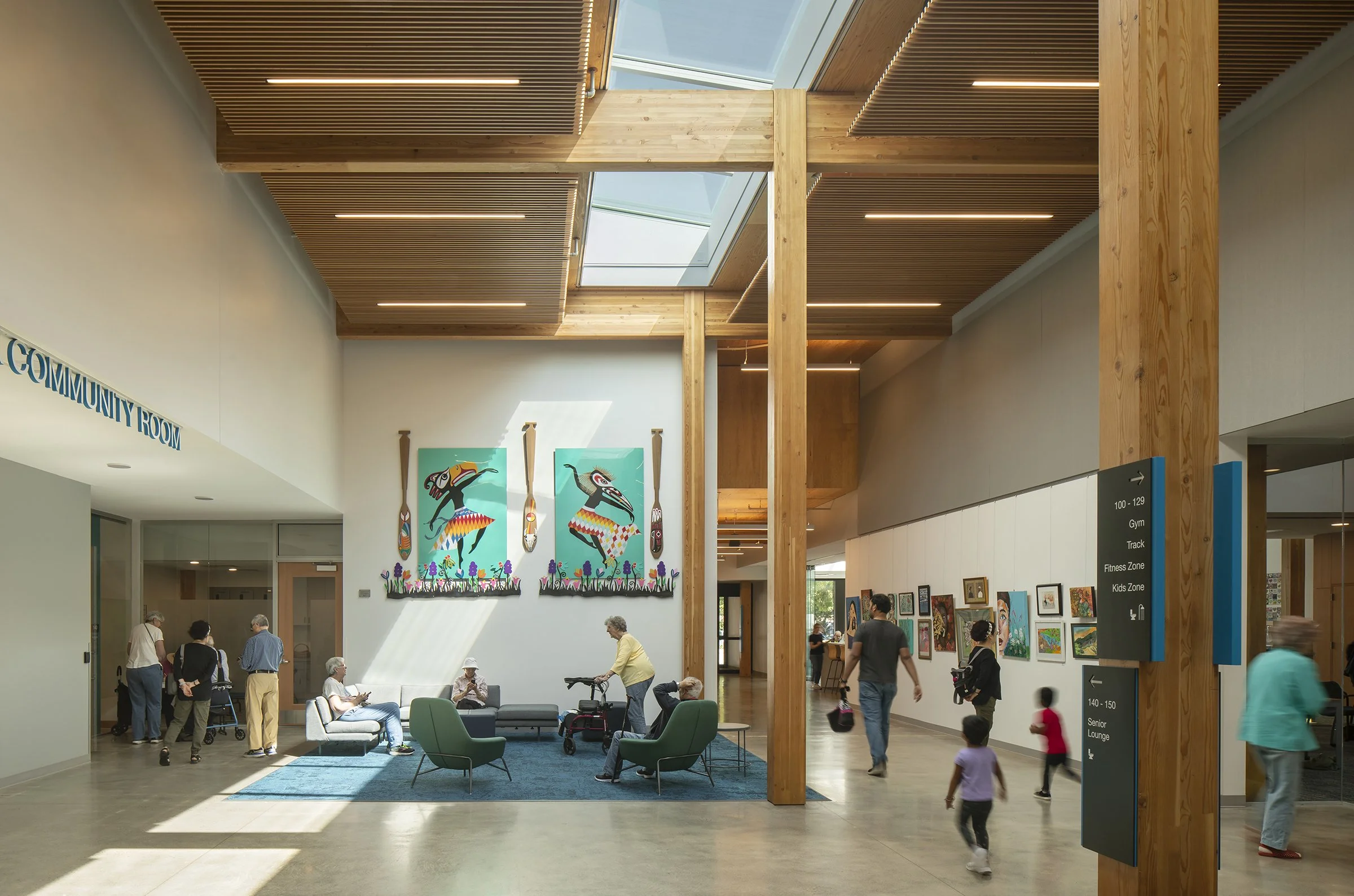
Redmond Senior Center / Photo by Lara Swimmer
Universal design is the thoughtful approach of creating products, environments, and systems that are truly usable by as many people as possible, regardless of age, ability, or circumstance. While aging sometimes feels distant, it is inevitable, often bringing changes in mobility, hearing, and quality of life. For some, these challenges are present from birth; for others, life can bring unexpected circumstances at any stage that impact the way we interact with our surroundings.
These realities are why Universal Design is so critical. Designing with the principles of Universal Design in mind helps ensure that our buildings are usable and enjoyable for all ages and abilities.
Today, we are seeing the aging of the baby boom. One of the largest population groups in history, this post-World War II generation will be 65 years old or more by 2030. The results are being contemplated throughout our culture. One projection is that there will be a deficit of at least 30,000 beds in nursing homes around the country by that date.
At a more personal level, many in this age group are considering how to navigate this transition gracefully. Universal Design will certainly help, but so too will an enlightened attitude towards aging. Elders in many regions have adopted strategies to mitigate the effects of aging. Exercise, a good diet, and resistance to behaviors that accelerate aging are all being adopted by many.
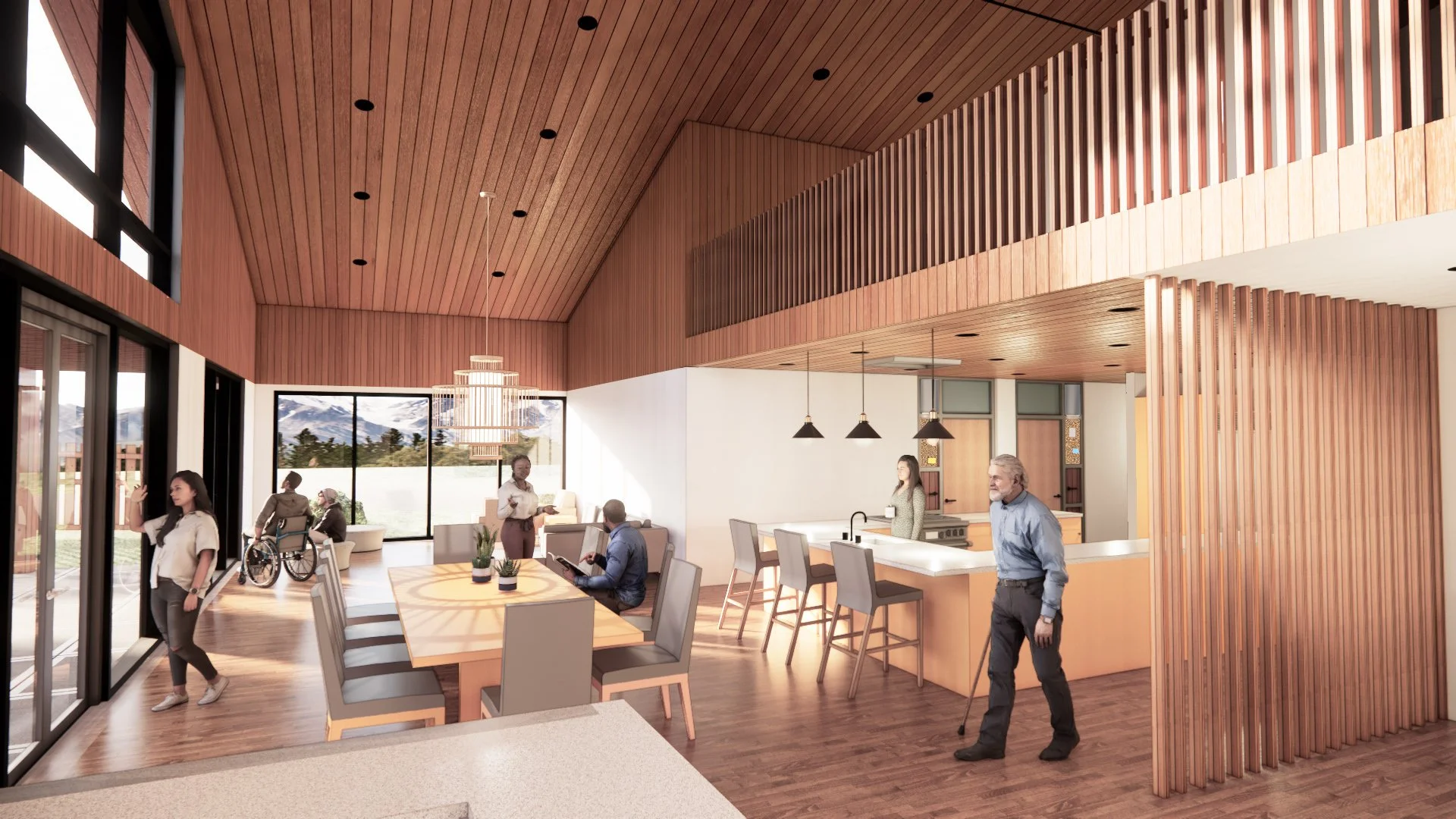
Jamie’s Place / Render by JA
Historically, aging was accommodated by the extended family. 200 years ago, a significant portion of our culture lived in multi-generational households. Multi-generational housing developed over time organically, deploying solutions that helped balance community with privacy.
For example, the traditional Hawaiian “Ohana” style housing clustered primary housing for growing families with small semi-private “apartments” within the house. Today, we call these accessory dwelling units, but the principle is the same. A discrete living space in a larger home is designed to allow a degree of independence for an elder while taking advantage of the benefits of living with family.
This pattern is re-emerging, but another trend is appealing to many. Aging in place is the idea of continuing to live in a familiar house through later stages of life. Of the many benefits of aging in place, the most important is that living independently at home is a safe and healthy option for seniors. Packed with people of all different physical abilities, nursing homes are less desirable in this regard. They can be overcrowded, limiting the amount of attention and care that the staff can provide at any one time.
For some, this option involves either a remodel of the existing home to reduce obstacles or a move from the old, larger family home to something more compact and accessible.
The idea of downsizing may also come with the concept of intentional communities that cater to or accommodate elders. In rural environments, a cluster of smaller homes can share solutions to mobility as well as activities and support systems that encourage engagement with others and prolong a coherent life. In more urban locales, the cluster of homes could take the form of apartments or townhouses clustered together in a mid-rise building or as a series of attached homes designed to create accessible, protected, and shared spaces both indoor and outdoor.
Whether it is care to design and implement the principles of Universal Design or the development of modern versions of multi-generational living or, perhaps, the creation of new patterns of housing that cluster elders and related services, the growing surge of elders in our culture will need to be accommodated.