
Design Trend: Adaptable Environs | Year in Architecture 2025
ORIGINALLY APPEARED IN LIBRARY JOURNAL ON NOVEMBER 5, 2025.
BY MONA JOHNSTON ZELLERS
In recent years, libraries have broadened the range of services they provide, finding creative ways to meet community needs, often within tight budgets. One trend has been the use of adaptable architectural elements that make spaces more flexible. At Cleveland Public Library’s Martin Luther King, Jr. Campus, moveable curtains create rooms that can grow or shrink depending on the size of a gathering. At the Mount Vernon Library Commons in Washington, glass walls serve a similar purpose.
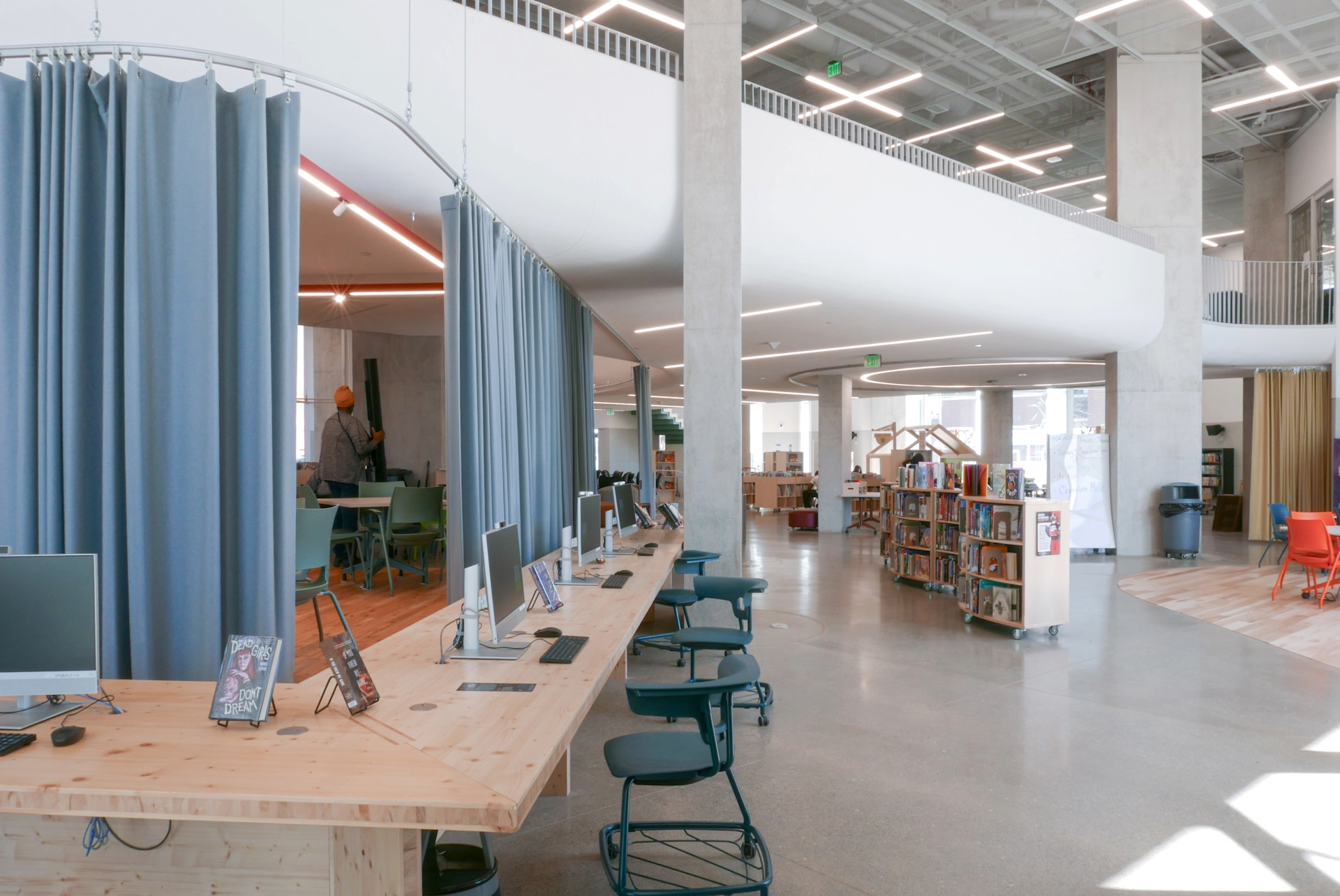
Cleveland Public Library–Martin Luther King, Jr. Campus, OH / SO-IL, J. Kurtz Architects, architects / Photo from SO-IL
Beyond enclosed rooms, many libraries are investing in informal gathering areas. The Maplewood Memorial Library, NJ, for example, supports community connection through tiered seating installations that invite informal gathering.
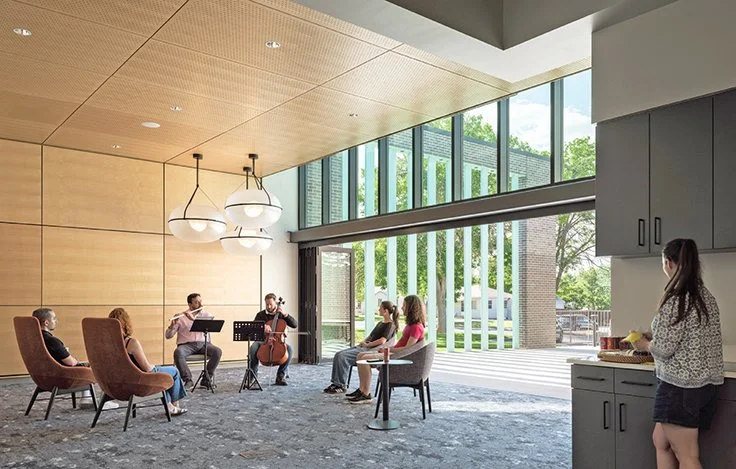
Anythink Library at the Thornton Community Center, CO / studiotrope Design Collective, Adolfson & Peterson Construction, architects / Photo by David Lauer
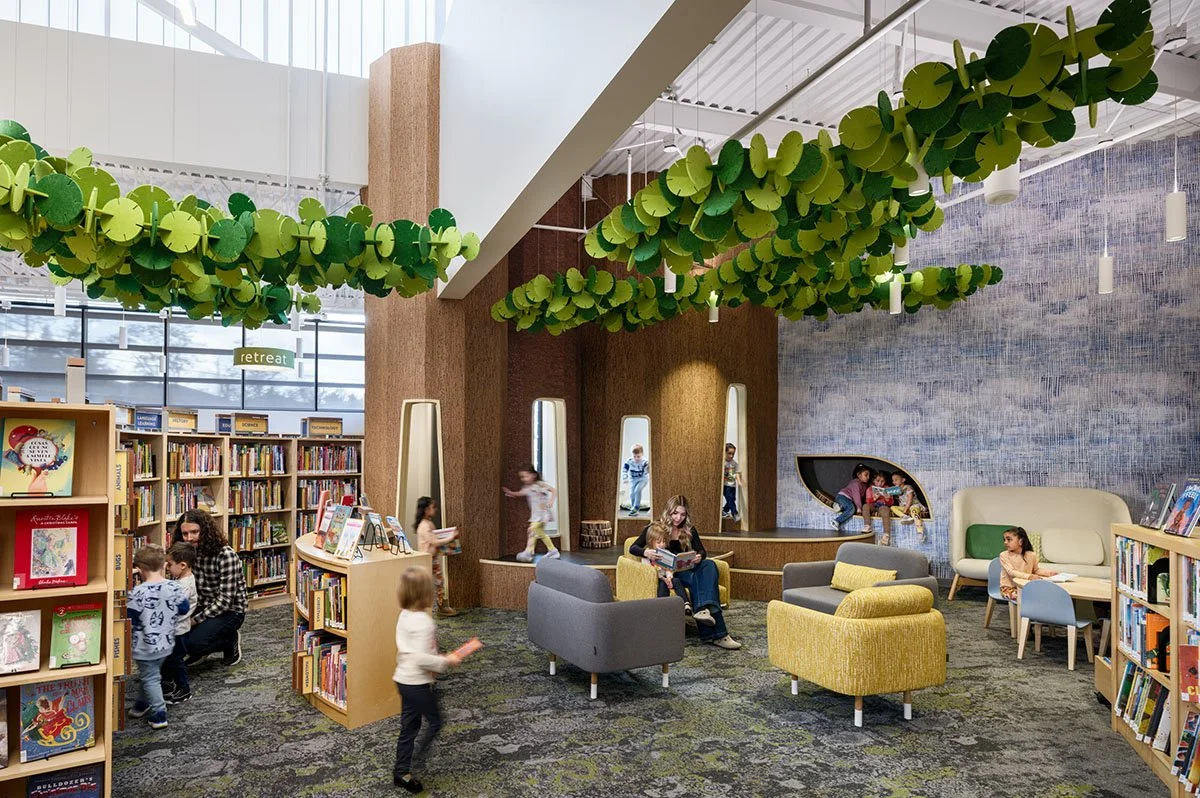
Anythink Library at the Thornton Community Center, CO / studiotrope Design Collective, Adolfson & Peterson Construction, architects / Photo by David Lauer
Libraries have also expanded programming outdoors using extended Wi-Fi, weather protection, and outdoor seating. The Saline District Library, MI, uses a stand-alone pavilion to support outdoor activities in all weather. Anythink Library at the Thornton Community Center, CO, combines the moveable wall and outdoor programming concepts with walls that open directly to the outdoors, allowing programming to spill outside when the weather permits.
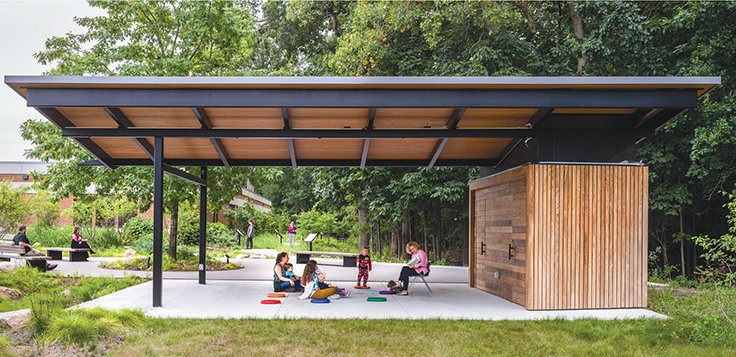
Saline District Library Outdoor Pavilion, MI / Photo by Justin Maconochie
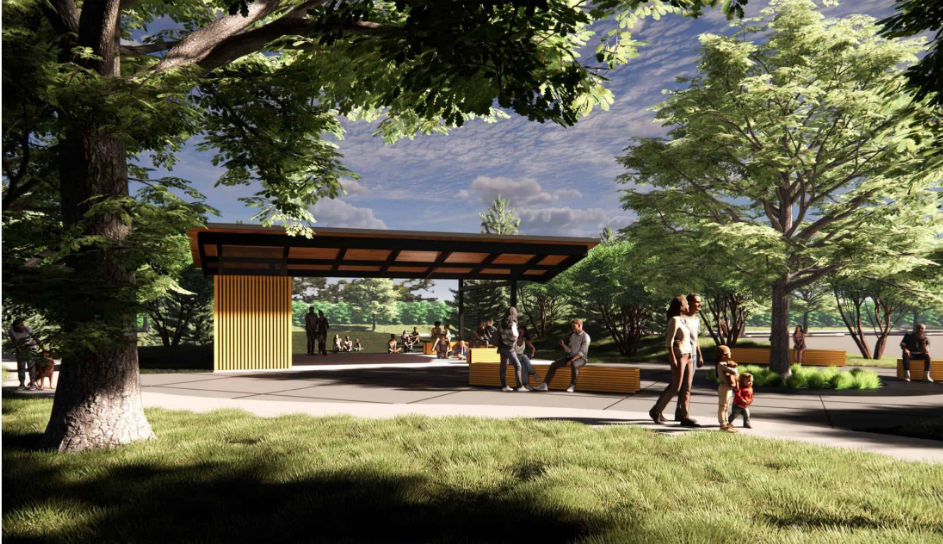
Saline District Library Outdoor Pavilion, MI / Render by Quinn Evans
Libraries are also rethinking design to support individual patrons. For those with sensory processing sensitivities, PTSD, or trauma-related challenges, navigating open floor plans with tall ceilings can be overwhelming. Providing spatial variety helps people find a place that feels comfortable and safe. At the Rudd Public Library, IA, sun-filled window seats offer a quiet retreat from the main space.
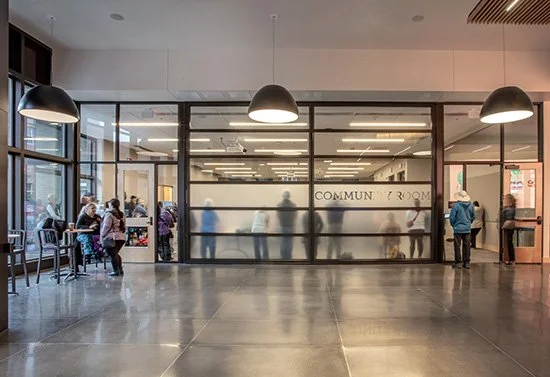
Mount Vernon Library Commons, WA / HKP Architects, architect / Photo by Leslie Schwartz
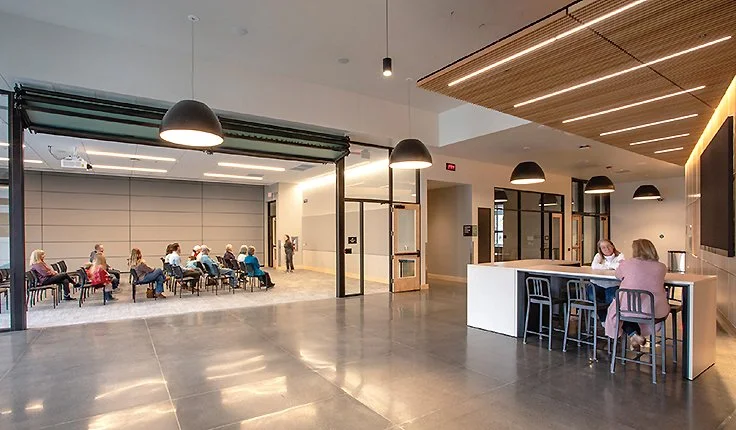
Mount Vernon Library Commons, WA / HKP Architects, architect / Photo by Leslie Schwartz
Another way that libraries are supporting individual choice is through the incorporation of inclusive restroom design, with strong examples at the Denver Central Library and Multnomah County Library’s Midland and Holgate branches in Portland, OR.
Together, these strategies show how libraries are becoming more adaptable, inclusive, and community-centered. By offering spaces that flex for large groups and small moments of quiet, extending their reach outdoors, and responding to individual needs with thoughtful design, libraries are evolving in step with the communities they serve.