
A Magnificent Obsession
BY RAY JOHNSTON
This post is just words and pictures, but it is inspired by the movie: “Springsteen: Deliver Me from Nowhere”. The biopic makes it clear that for Springsteen, music was (and is) a Magnificent Obsession.
I have always thought that Architecture can be one too. Decades of practice have not diminished that sense. Architecture for me is an obsession. This movie brought home what that term really means. Springsteen and many other creatives in our culture have been driven by an affection for the work, but also by unforeseen circumstances.
What is an obsession? It is a thought, a sound, an experience that won’t leave you alone. It’s a perpetually recurring part of life that fills time, especially the idle moments. It is a drive to create.
“Magnificent Obsession” was also a movie created in 1954 and prior to that in 1935 from a 1929 novel. And the name was applied to a song by Nat King Cole in 1958:
“You’re my magnificent obsession
The greatest wonder on this earth
The Taj Mahal and other splendors
To me really have no worth
You’re my magnificent possession
A treasure lent me from above
As long as I have breath within me
You’ll be my one and only love”Nat King Cole, Magnificent Obsession 1958
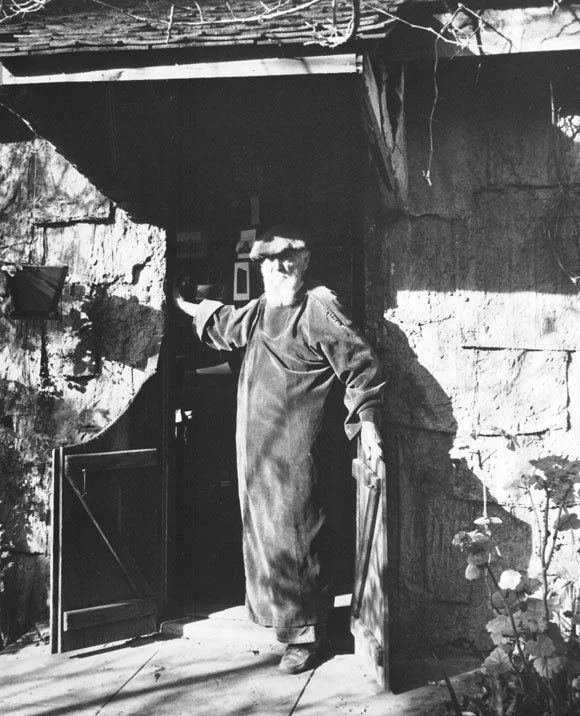
Bernard Maybeck at his home in Piedmont, CA
In the world of architecture obsession can take many forms. For the early 20th century architect Bernard Maybeck, it was among other things the creation of a sense of drama in his work. He created dramatic spaces but also occupied them in a dramatic way!
For Steven Holl, the flow of light amongst forms is an obsession. Steven famously sketches and watercolors constantly, exploring the way light and color come together to create transcendental experiences. We can all see the results of a brilliant mind dedicated to creating something whether it’s music, a painting, a sculpture, a movie or a piece of architecture.
Architecture is unusual in the world of the arts. It involves the creation of products that are positioned in the marketplace or personal environment to provide a place to live, a profit or a space for public use. Architecture frequently satisfies physical needs. A place to shelter, perform or gather. Few people “collect” architecture the way other pieces of art are collected. It’s expensive and takes significant periods of time to create.
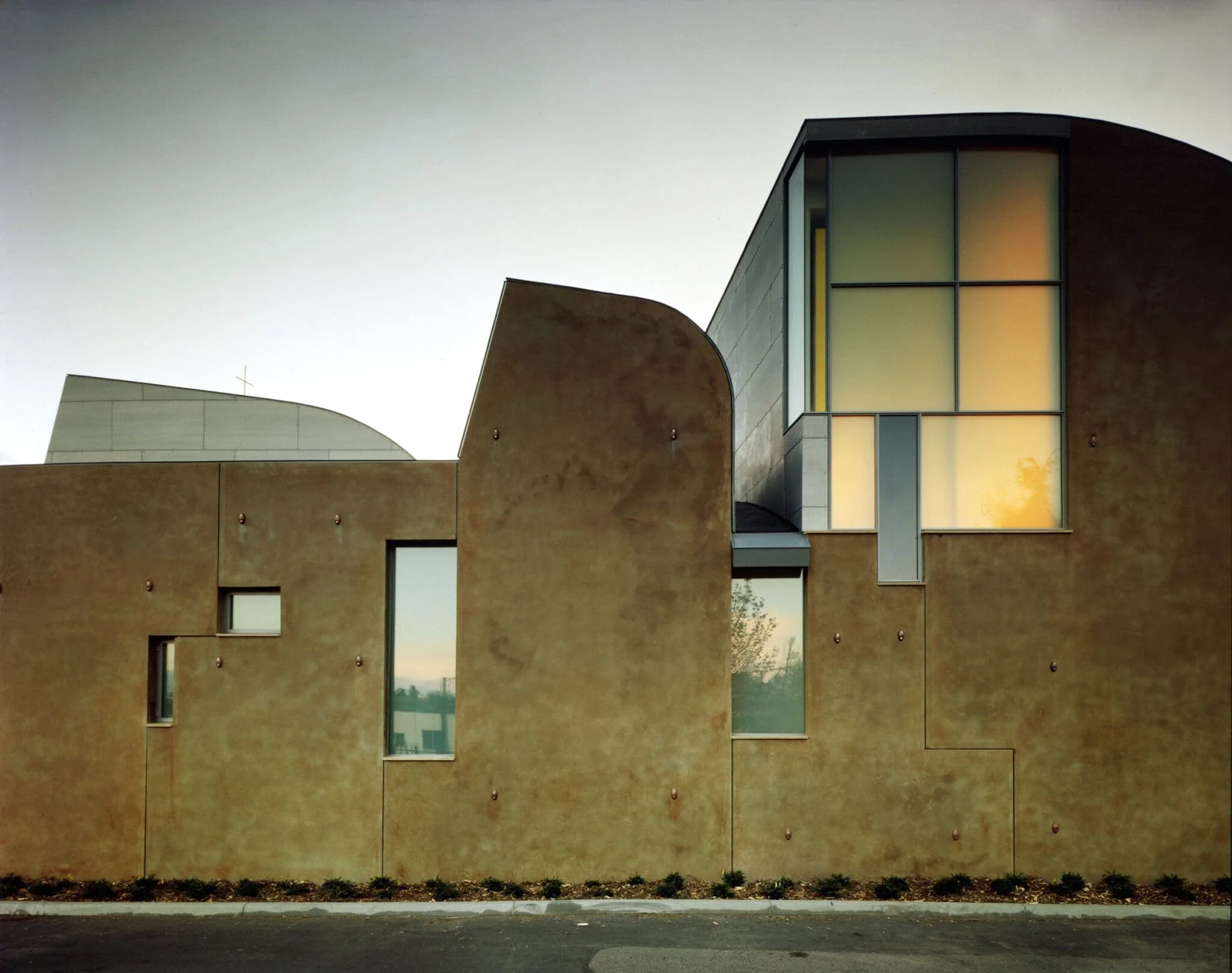
St. Ignatius Chapel / Photo from Stephen Holl Architects
Because most users of architecture have lived their lives in and around buildings, it is inherently more collaborative than many arts. Consequently, the element of obsession is frequently skewed for each project. Architecture is influenced by practical things like access, response to topography, inflections to address climatic conditions, etc., but it is also affected by the tastes and predilections of those who commission architects to design buildings.
Some would say that exceptional architecture requires a Magnificent Obsession. It requires knowing a design deeply enough to dream about it or to wake up with a vision that resolves a detail problem or to feel compelled to model a detail either physically or virtually to see how it actually behaves. This requirement of exceptional architecture runs up against the constraints of time and money, but somehow the best architects find a way, perhaps through obsession, to refine and resolve and to come as close to perfection as possible.
Read more about how architects, such as Vladimir Ossipoff, Mies Van Der Rohe, and James Cutler, have designed with an obsessive attention to detail on Ray Johnston’s Substack!