
Designing in Snow Country
BY RAY JOHNSTON
The Cascade Mountains present unique design challenges. Fueled by the Pacific Ocean, winter snows can be dense and moist on the west side of the Cascade Crest. Snow loads reach as high as 350 lbs on high westerly slopes. To address these loads, heavy timber or steel frames are needed. When combined with wind loading and the earthquake-prone nature of the northwest, these loads present a unique structural challenge.
While the east slope of the Cascades sees lower snow loads, the temperature gradient from the crest to the Columbia Gorge is significant, generating strong winds in addition to substantial snowfall. In these conditions, designing for high wind presents the structural challenge.
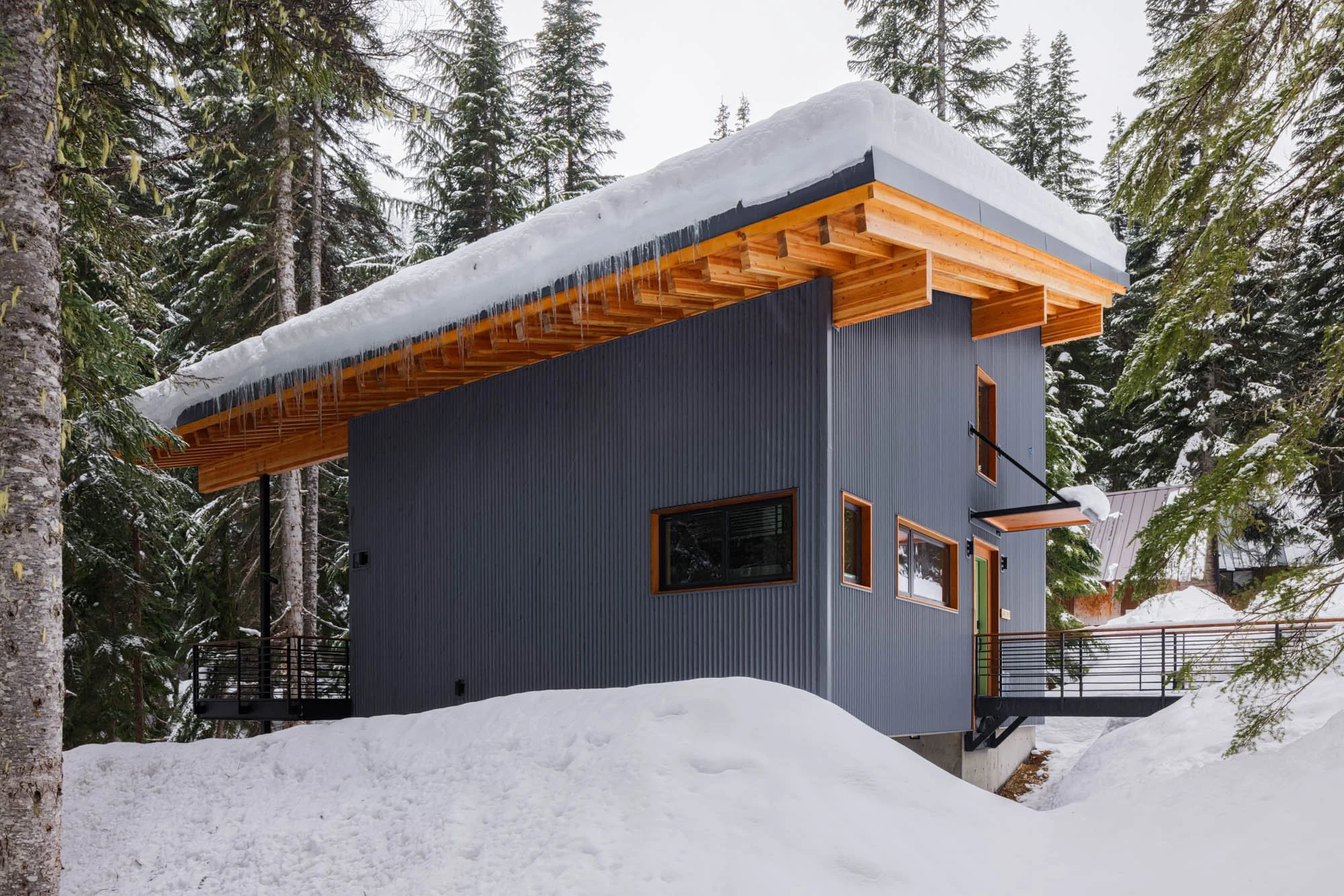
Yodelin / Photo by Ed Sozinho
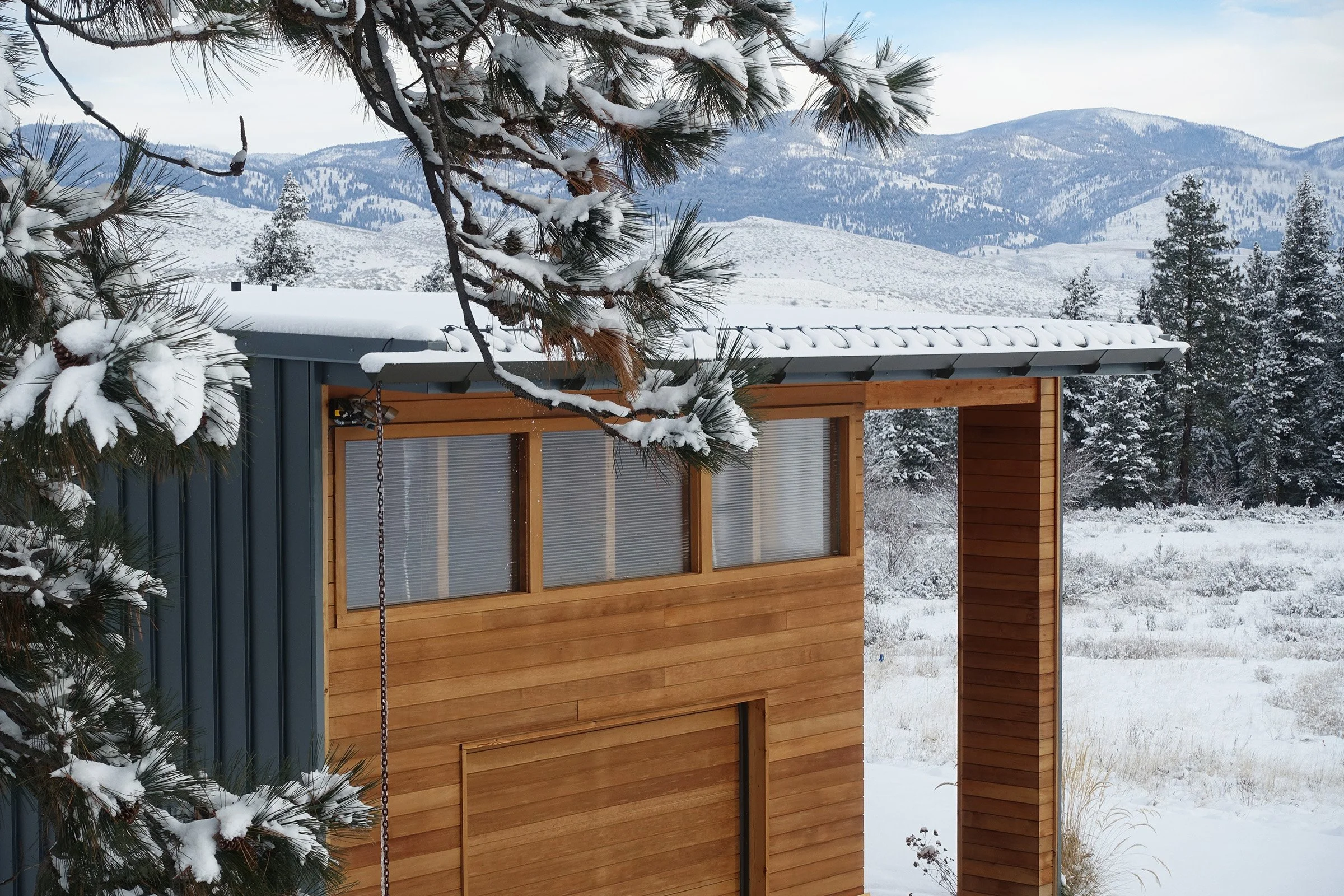
Wolf Creek Red Tail / Photo by Johnstons
On both sides of the Cascade Crest, the question of holding snow on building roofs vs letting it slide is a common one. Letting snow move reduces loading requirements by 15%, but at what cost? Snow sliding off a roof into a parking area can cause significant damage to vehicles. Letting it slide near an entry may mean shoveling, snow blowing, and plowing to keep access ways clear. Holding the snow on the roof can mitigate these problems and provide an insulating blanket in extremely low temperatures. It may be counterintuitive, but when it's below zero by double digits, a nice warm blanket of snow just below freezing temperatures can help to reduce low temperature impacts.
This is all well and good, but when the spring comes and the roof snow melts over 4-6 weeks, do we really want incessant dripping from snow held on the roof? If the answer is no, sturdy steel gutters, possibly kept ice-free with heat tape, may provide the answer.
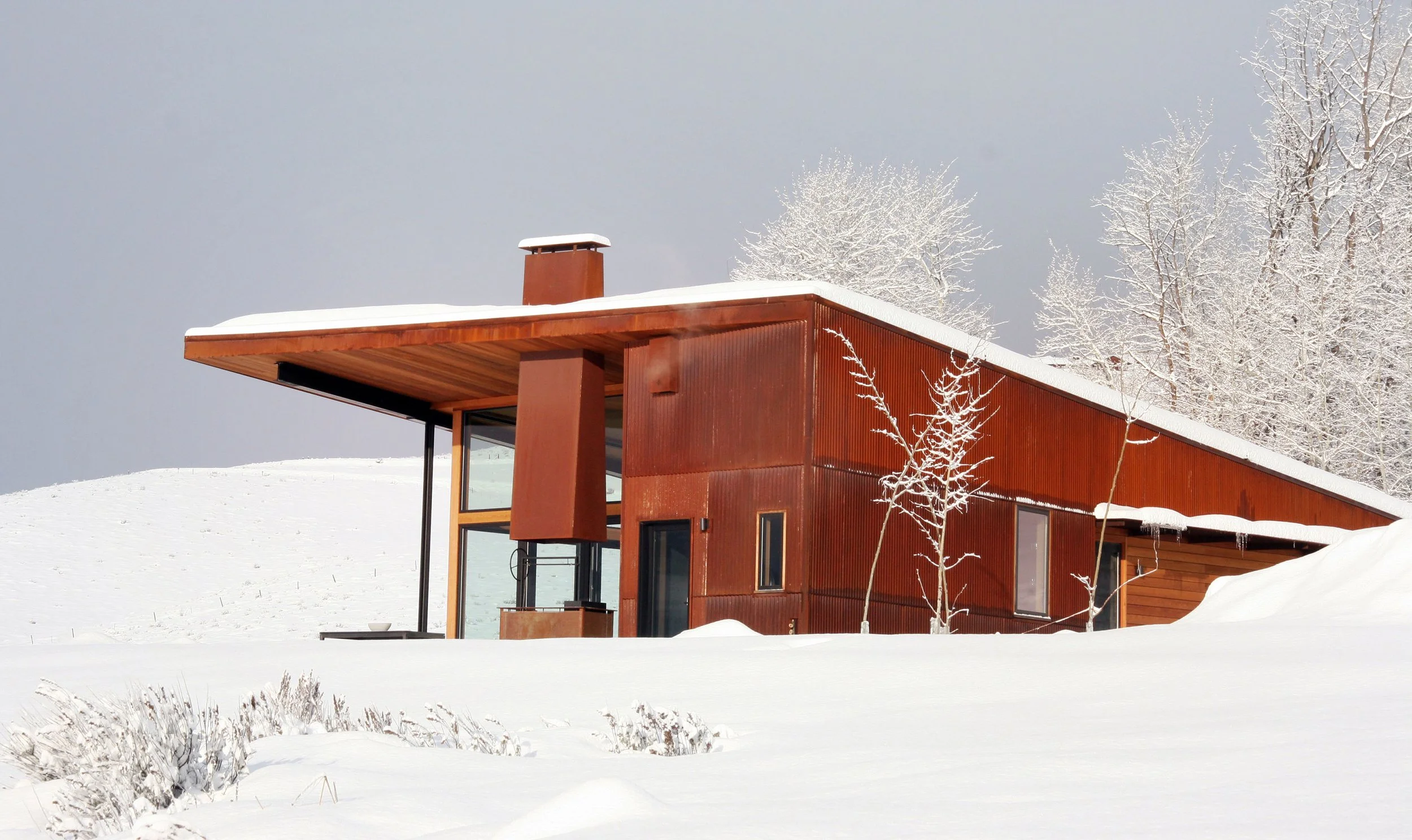
New Caelifera
In addition to snow loading, designing for temperature and humidity variation is essential. Traditional ventilated roof systems are great for managing temperature, but they are also prone to various types of failure. These can include unexpected compaction of insulation over time or screens that are not installed or are damaged during the life of a building. When this happens, insects and rodents can infest a building assembly.
One solution to this challenge is the use of “spray foam” as part of the insulation package. Spray foam or Polyisocyanurate is a plastic-based closed-cell insulation. It expands to fill nooks and crannies in framing assemblies, effectively sealing the structure. “Spray foam” once used an expanding agent that was damaging to the ozone layer. Today, the industry uses agents that do not damage the environment. However, “spray foam” is not a recyclable product. The tradeoff is that this material, when installed properly, provides a complete seal for roof and wall assemblies.
With traditional building techniques, significant air change occurs due to infiltration. “Spray foam” application minimizes air changes. It also has a high insulating value per inch and is effective in resisting insects and rodents intrusion into building systems.
There are many other challenges to building in snow country. Designing an “air lock” entry can help. Using effective ventilating systems, such as an Energy Recovery Ventilator, will control humidity as well as energy usage and provide fresh air in a well-sealed building. Lastly, many cold climates also have clear days year-round. In these climates, the use of photovoltaic and solar thermal energy systems can be very effective.
Modern building techniques combined with careful and respectful site design can be effective ways to live within our mountain environments.
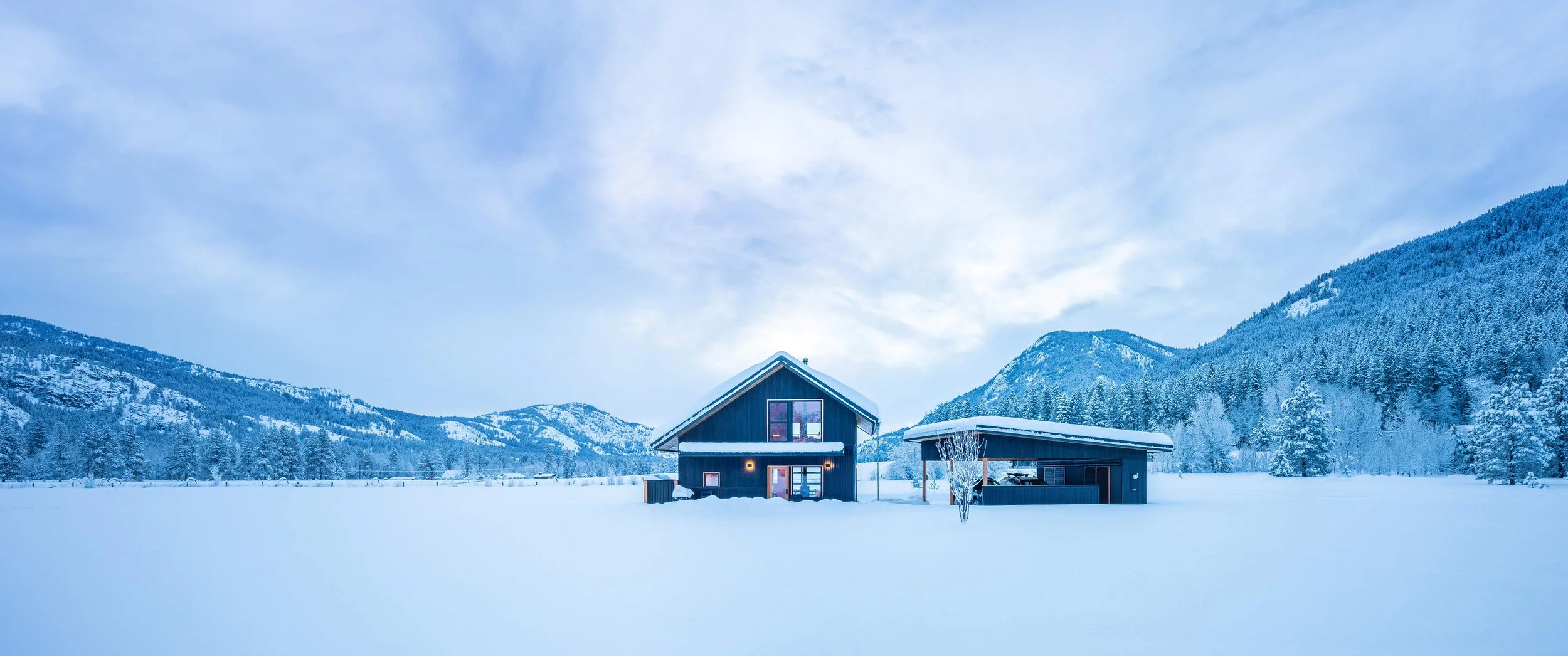
Gear Loft / Photo by Benj Drummond