
Ocean Front Architecture
BY RAY JOHNSTON
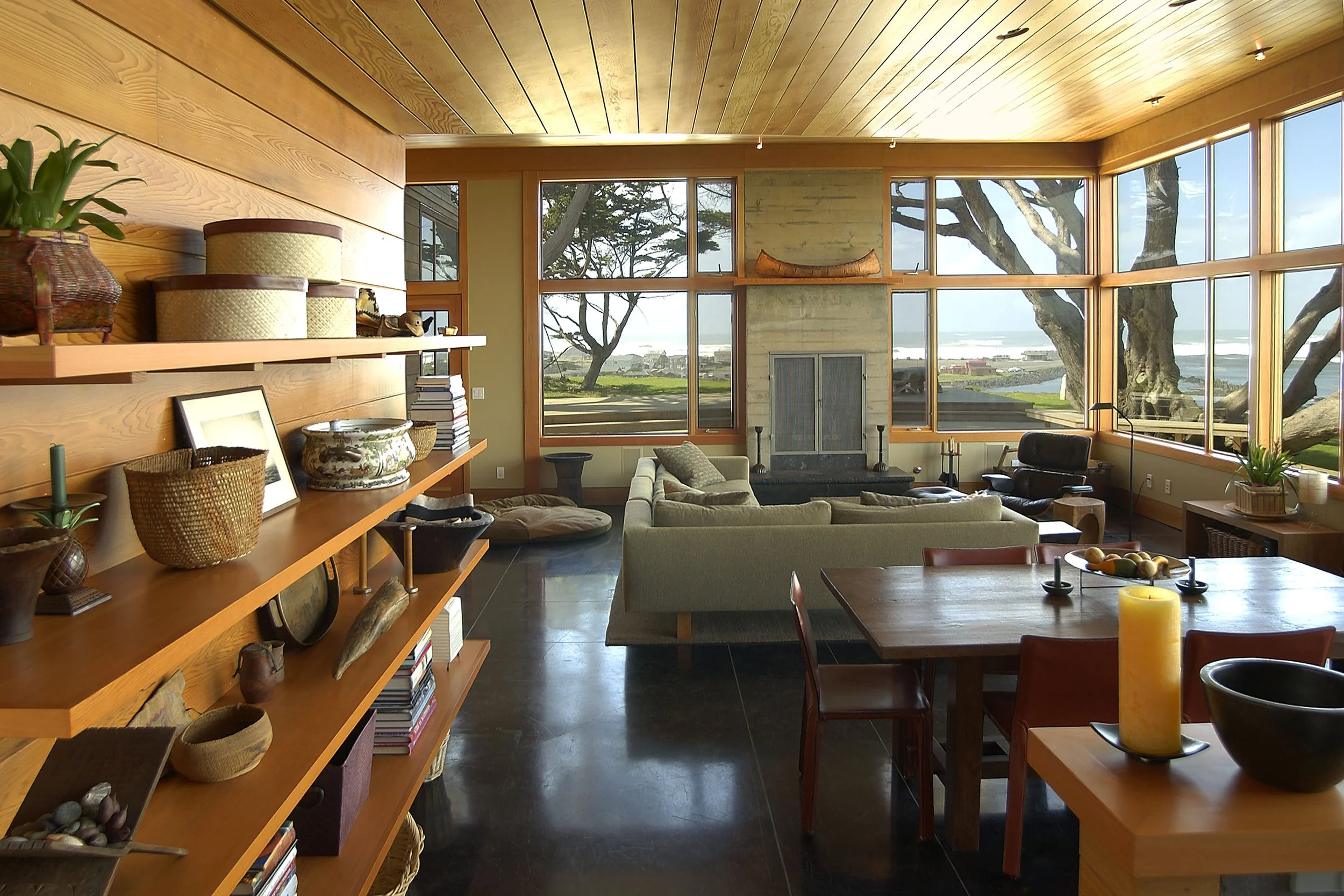
Bandon Bluff
Coastal environments are breathtaking, but they pose unique challenges for building durability. The combination of saltwater, wind, and humidity can accelerate wear on both interiors and exteriors. With thoughtful planning and careful material choices, beach houses can enjoy a longer, more resilient lifespan.
Coastal winds bring moisture and salt, which can infiltrate and corrode exposed surfaces. Every building system, from windows to exterior trim, should be purposefully designed to withstand these harsh conditions.
When selecting windows and metal components, look for brands that use stainless steel fasteners and aluminum cladding finished with Kynar, a durable protective coating. Other metal elements should also be formed from stock coils covered by a Kynar warranty to maximize longevity.
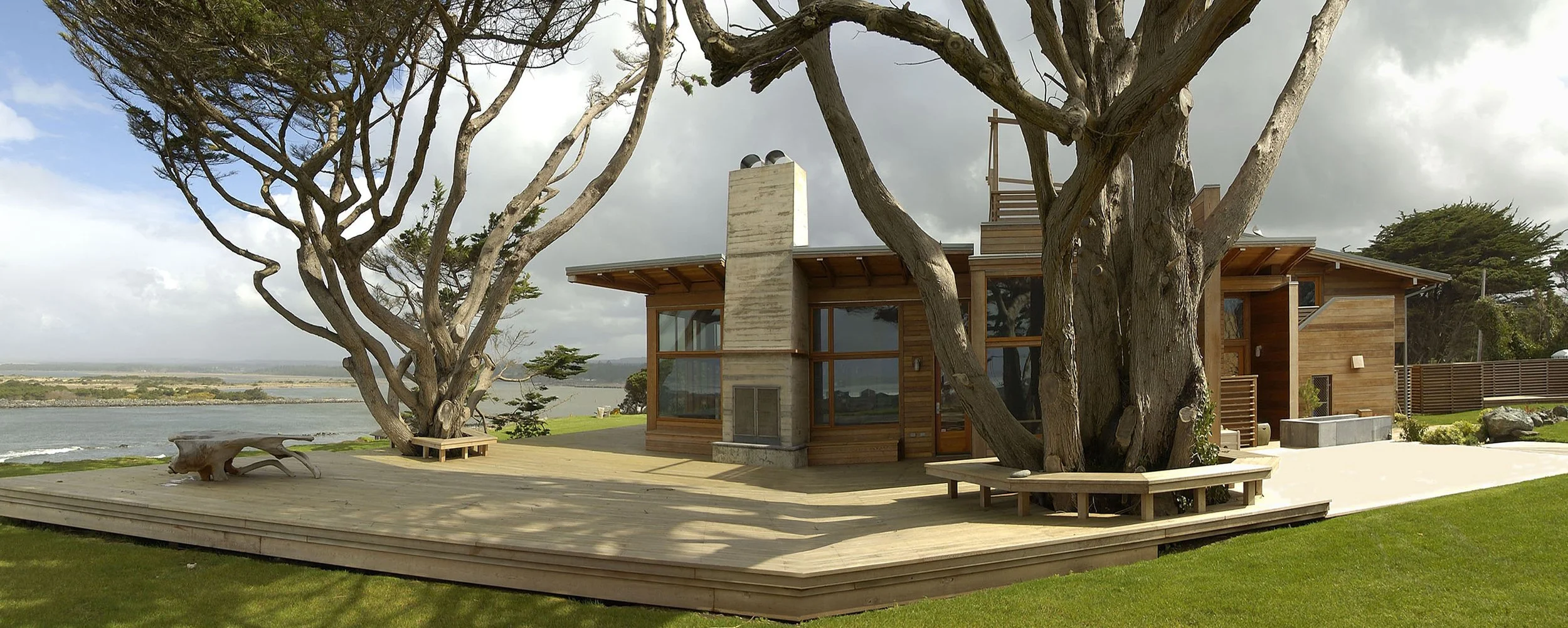
Bandon Bluff
For siding, exterior trim, and related details, corrosion-resistant fasteners, ideally stainless steel, are recommended, and it’s wise to use wood coatings specifically formulated for resistance to wind, humidity, and salt. High-exposure locations will likely require recoating at a greater frequency than product warranties suggest. One time-honored approach to coastal siding is cedar, particularly Eastern White, Western Red, or Port Orford Cedar. These woods naturally weather to a silvery gray over time, though each will go through periods of darker or more irregular coloration as they age. More modern alternatives, such as Scandinavian heat-treated woods like Kebony and Accoya, offer similar weathering characteristics with exceptional durability.
There are several other approaches to managing wood siding. Two of these involve stains. Oil-based penetrating stains will, in general, last longer and look better than membrane-based coatings using latex. The more pigment in these stains, the longer they will last. Clear finishes are the shortest-lived. Be prepared for frequent coatings on highly exposed surfaces. Another type of stain is referred to as weathering oil. These products are intended to get your wood siding past the less attractive “teenage” years, common prior to the silvery condition that comes with age. As the wood evolves towards that condition, the weathering oil fades. The other approach is to use a darker color with greater pigment content. These tend to be more protective of the underlying wood. Latex-based stains and paints can be effective, but are likely to expand and contract with the changes in heat and humidity over time. The result can be failure cracks or bubbles in these membrane-based coatings.
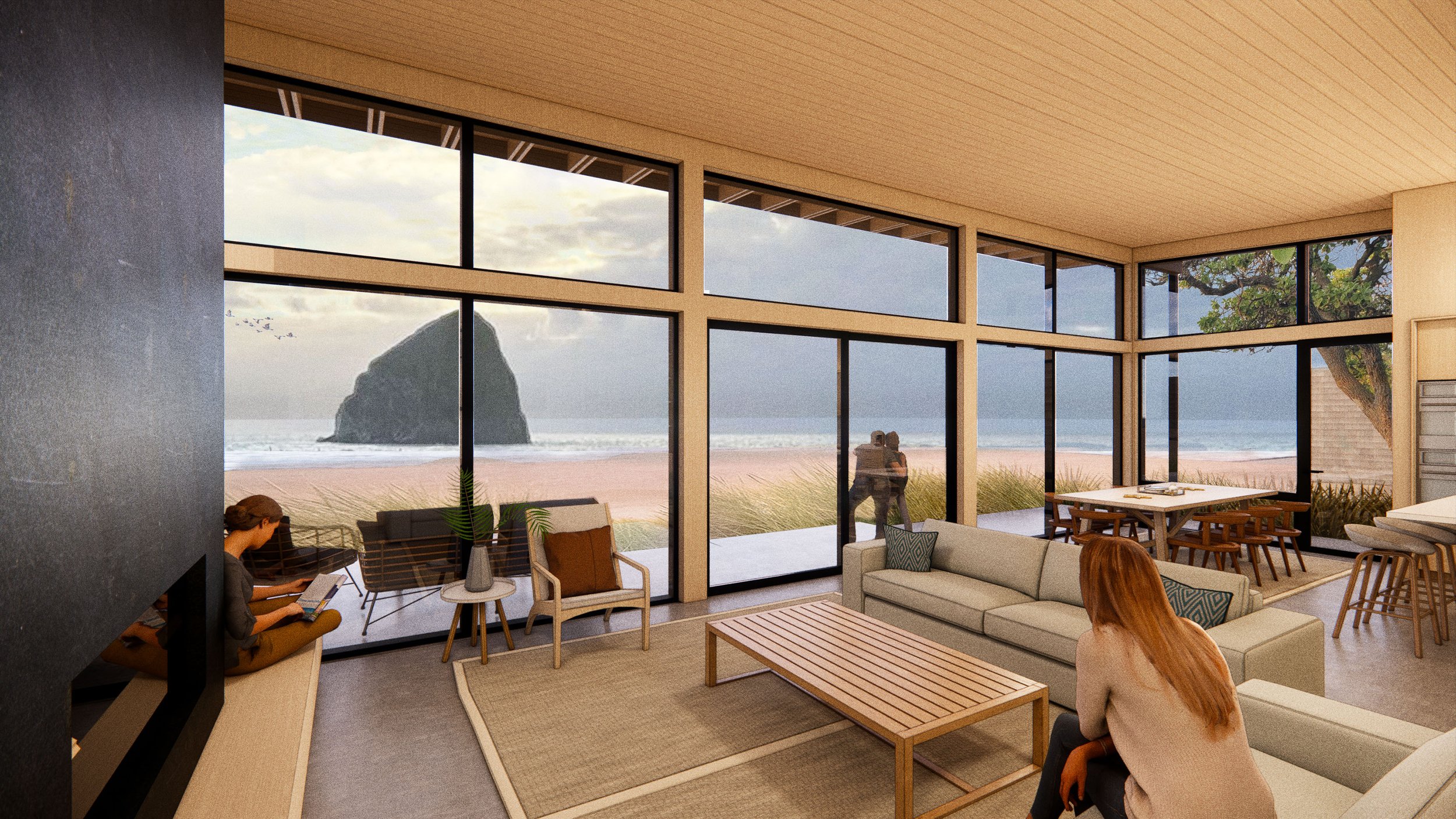
Oregon Beach House / Render by JA
Indoor air quality and humidity are also issues in marine environments. In some locations, indoor humidity can be handled through the use of heat pumps for heating and cooling. Models that condense moisture out of the air can do part of the job, but in highly humid environments, an additional dehumidifier may be warranted.
Energy Recovery Ventilators (ERV) are available to provide fresh air without losing heat. These systems harvest heat while exhausting indoor air, transferring that heat to an incoming stream of fresh air. They can also be married to a filter system. Merv 13 filters can be added to an ERV, helping to maintain air quality in extreme conditions.
Modern insulations allow the use of closed-cell roofing, flooring, and wall assemblies that can guard against uncontrolled air infiltration and air leakage through these assemblies.
Outdoor showers and foot washers can also be a great addition to a beach house. These will survive for longer periods if they are sheltered from prevailing winds. While some manufacturers have handheld shower assemblies suitable for the saltwater environment, be prepared for shorter lifespans for this equipment. An option to typical shower assemblies is the use of a bronze hot/cold frost-free hose bib combined with a hand-held shower head assembly. These are simpler than standard equipment and do not offer fine-tuning of shower temperature, but their simplicity can lead to a longer life span.
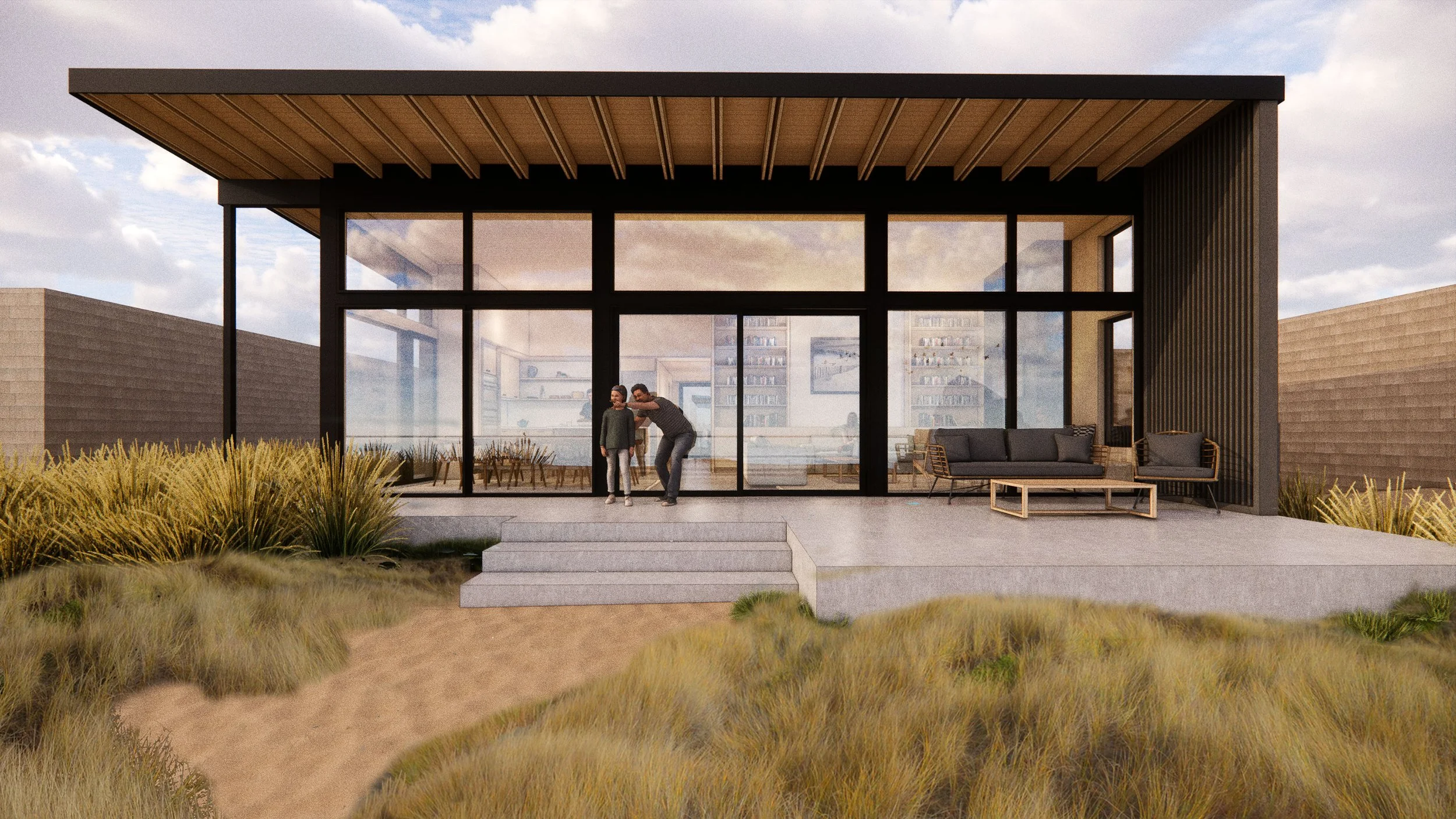
Oregon Beach House / Render by JA
There are larger-scale design techniques that can enhance a coastal design. To facilitate comfortable indoor-outdoor living in an ocean environment, look for ways to shelter from the wind. One easy way is to use solid materials such as glass for deck railings. A factory “Rain-X” like coating can facilitate cleaning of the glass to keep it looking fresh.
Large-scale design strategies, such as shaping the building to create wind shadows, also play a critical role in coastal comfort. These occur when a portion of the building blocks the prevailing winds. Much of the West Coast experiences afternoon winds out of the northwest during nice weather. These winds can be chilly. While they blow, a southwest deck orientation with a portion of the building to the north can create a calm pocket that works part of the time. There are no silver bullets to keep all winds at bay, but creating wind shadows is a good technique.
The marine environment is fascinating. It connects us to our planet in a way like no other. The ocean, sound, or bay extends to the horizon, supporting all kinds of wildlife and reflecting day-to-day conditions. It also provides wonderful opportunities for recreation and play! While there are no guarantees as to the lifespan of buildings and their components in this environment, one can certainly maximize the success of a beach house over time!