
The Architecture of the Cascade Mountains
BY RAY JOHNSTON
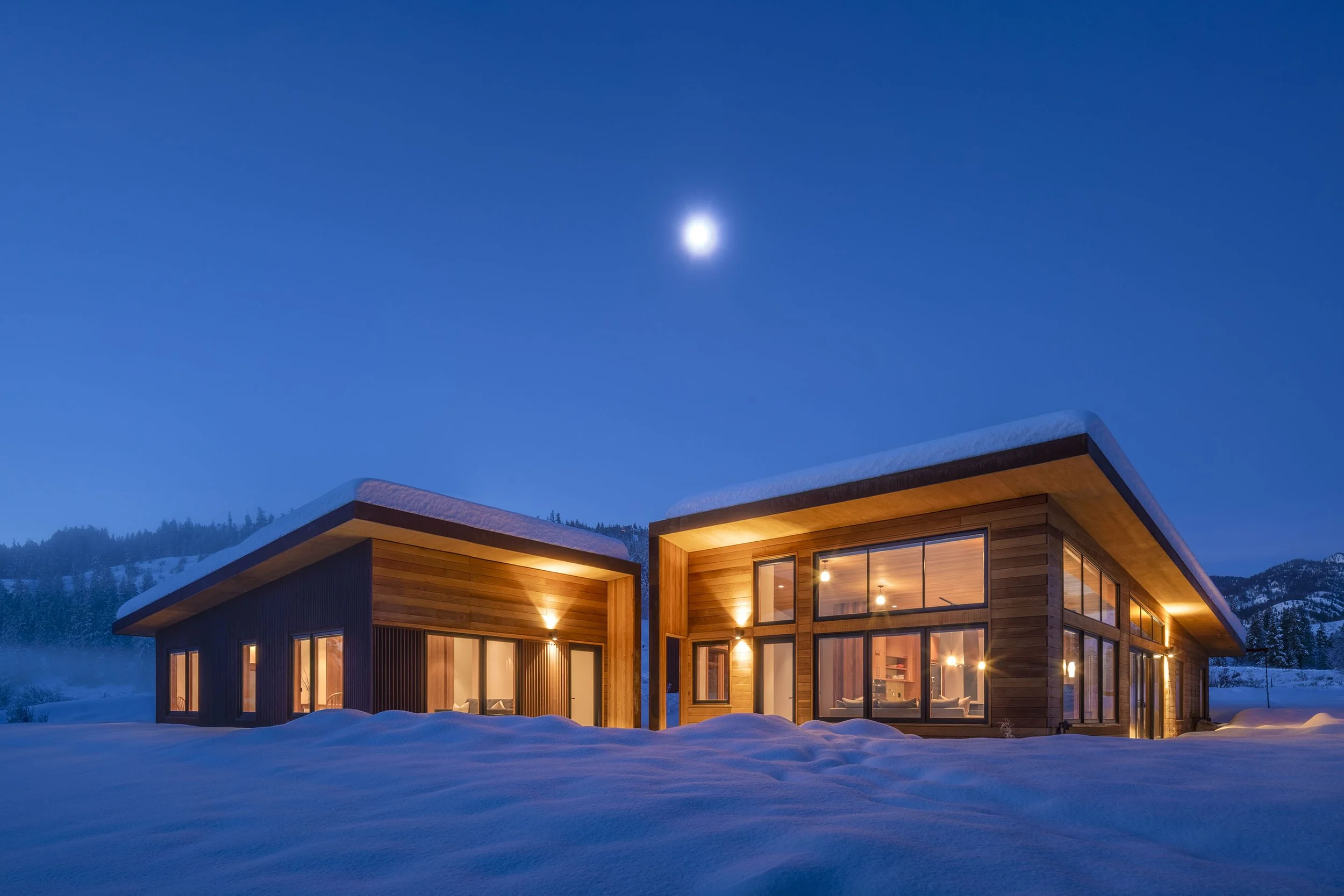
Wolf Creek Cabins / Photo by Benj Drummond
The vernacular architecture of the Cascades evolved in response to a rich variety of environmental conditions. The utilitarian farm shed can be seen throughout this region. These structures were robust, designed to hold the snow, resist the rain, turn an opaque wall to the prevailing winds and take advantage of the warmth of the strong low angle sun.
As time went by and the modern age developed, architects in some parts of the region adopted characteristics of the vernacular. They deployed low slope roofs which held the snow, solid walls were turned protectively against the wind and open walls welcomed the sun. These strategies were successful. The snow added an insulating blanket on bitterly cold days. The open sides of these buildings provided shelter from the wind and were warmed by the sun.
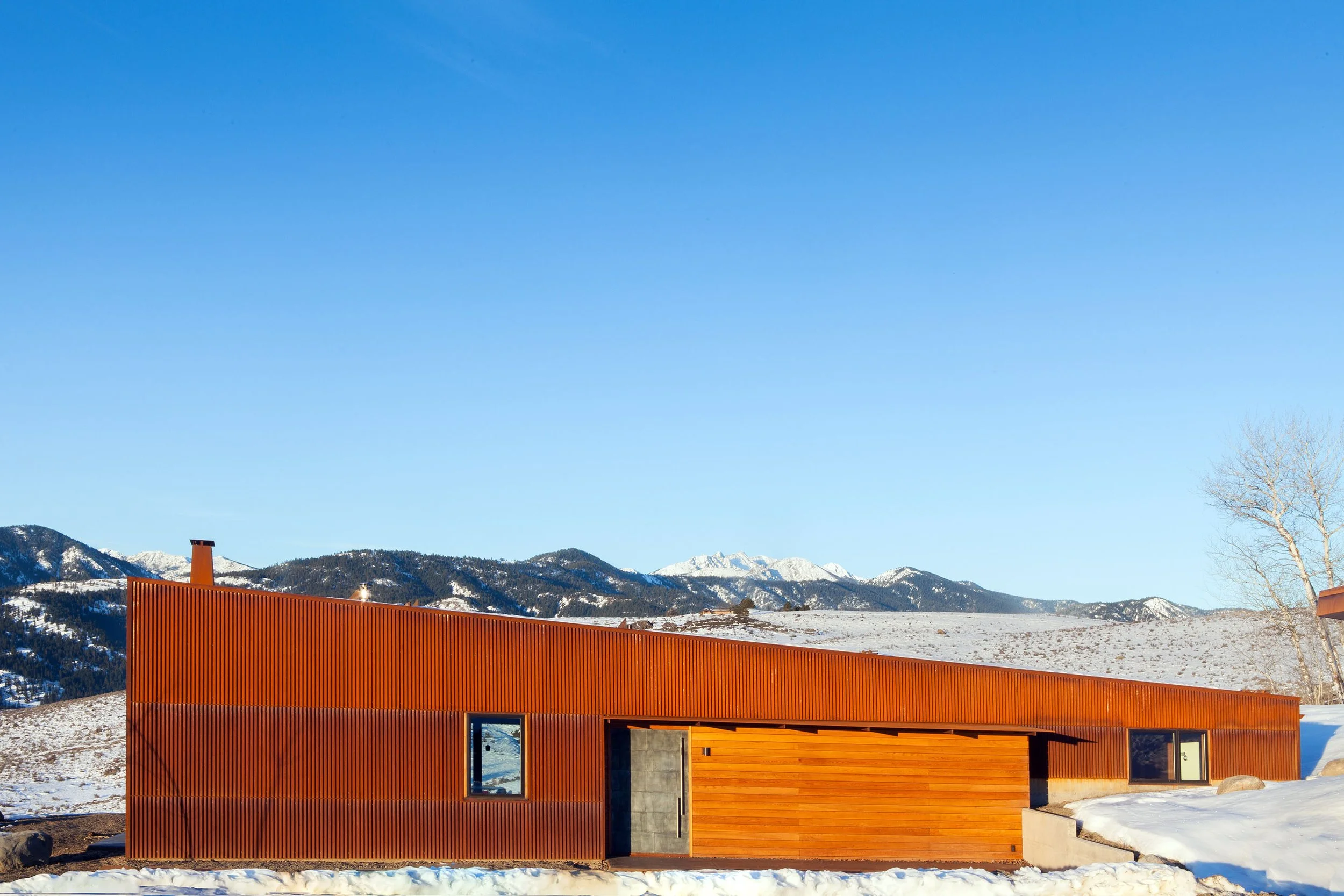
New Caelifera / Photo by Phoebe Webb
The Methow Valley on the northeast slope of the Cascades is a place where this evolution has continued. Open agricultural sheds were emulated by Doug Potter who formed the Office of Shackitecture late in the 20th century. Doug’s buildings deployed reclaimed and site milled woods in simple forms reminiscent of their utilitarian predecessors. He glazed open walls, decorated structure with carved shapes, reused old steel to make firm connections and created a unique new vernacular.
As time passed, other architects including Johnston Architects, CAST, and PBW were asked to design houses in this wonderful but somewhat remote valley. In addition to the simple shed idea, architects began emulating other forms such as barns and older farmstead houses. These typically gabled buildings were adapted to modern aesthetics and transformed to meet energy codes and to take advantage of the potential that new insulated glass and door systems offered.
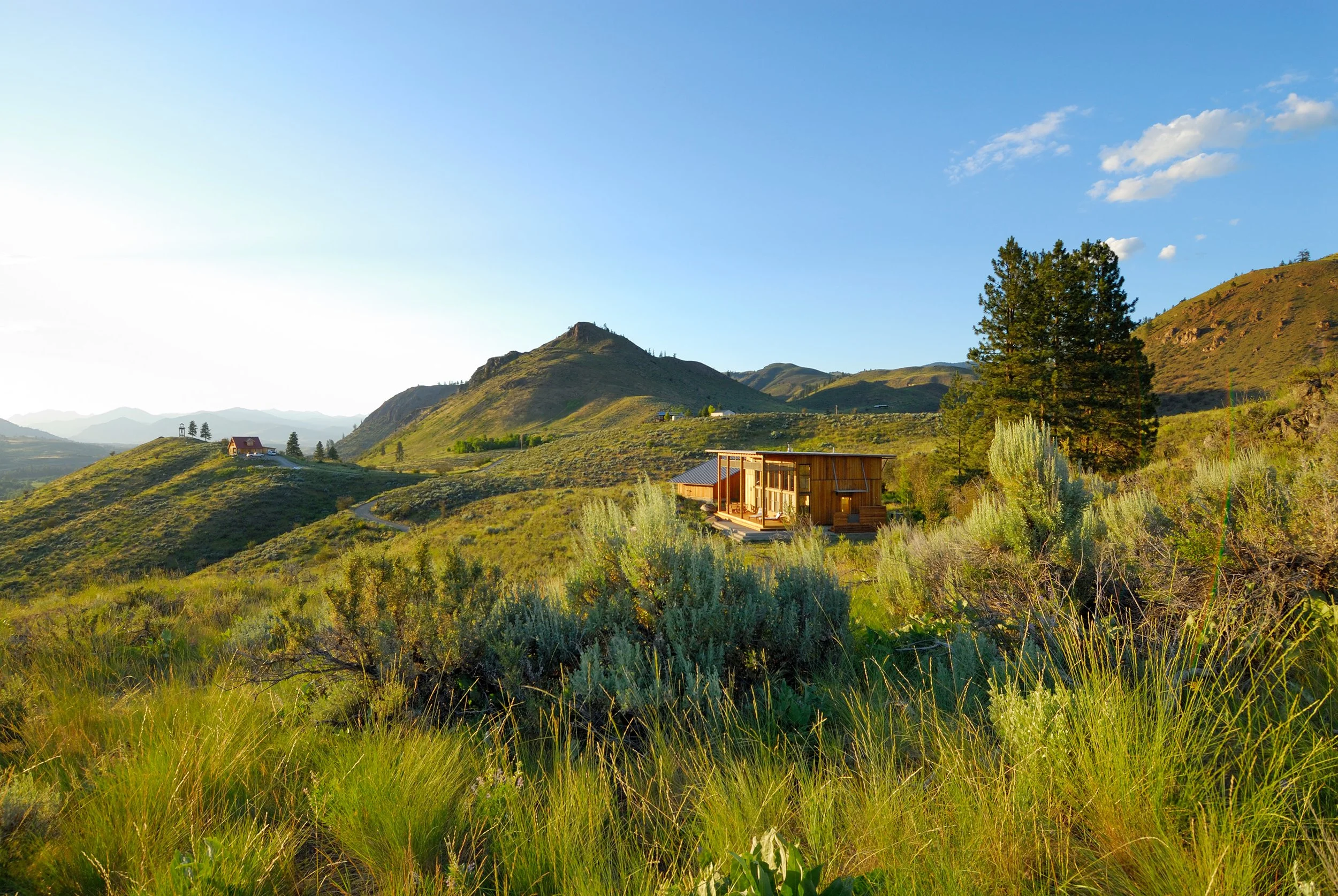
Twisp Cabin / Photo by Will Austin
This group of architects designed dozens of buildings that owe their inception to the exquisite practicality of the rural vernacular. Unlike some areas in the Cascades, these buildings are generally tucked away allowing the surrounding magnificence of the natural environment to dominate the scene.
While the Methow Valley has increased in population, changes to its appearance have been subtle and mild. It still feels like the valley it was decades ago. But if you look closely, you will see a wonderful assortment of new buildings along the river and in the folds of the surrounding hills. This aesthetic has infused other mountain communities in the northwest and provides welcome relief from the architecture of larger towns and cities that strive to create a built environment that was never meant to be.
Read more about the evolution of architecture in the Cascades on Ray Johnston’s Substack!