
The View From Here
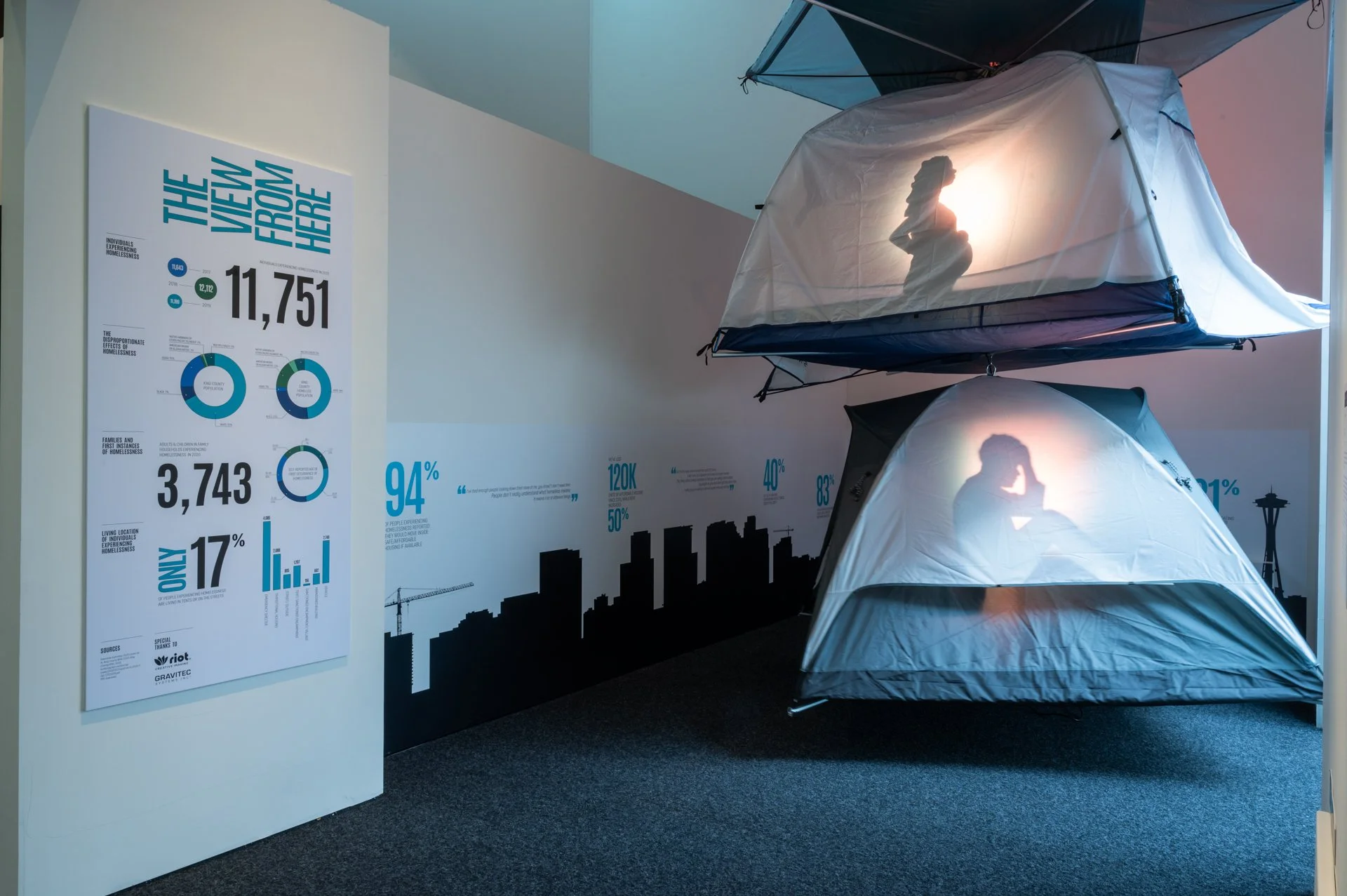

In 2020, more than 11,750 people experienced homelessness in King County, including 4,700 who slept unsheltered. Of those thousands of people, 446 were unhoused in Bellevue. This number had increased by 32% since 2019, and the 2021 Count Us In report had yet to be completed.
At the same time, the metropolitan area led the United States in the number of construction cranes dotting the skyline. In 2021, 43 cranes rose over Bellevue and Seattle, supporting the construction of high-rise residential and office towers, while the number of individuals living unhoused continued to climb. This stark contrast was visible in the glittering skylines of our cities, even as tent encampments and lived-in vehicles became ubiquitous at street level.
People living unsheltered report feeling unseen, separated from their housed neighbors by an invisible wall. These dynamics perpetuate stereotypes about individuals experiencing homelessness. Many people who live safe and sheltered lives look the other way, choosing not to see them as fully human. Yet those living unsheltered are people just like us, seeking the same things we all seek: safety, connection, and purpose.
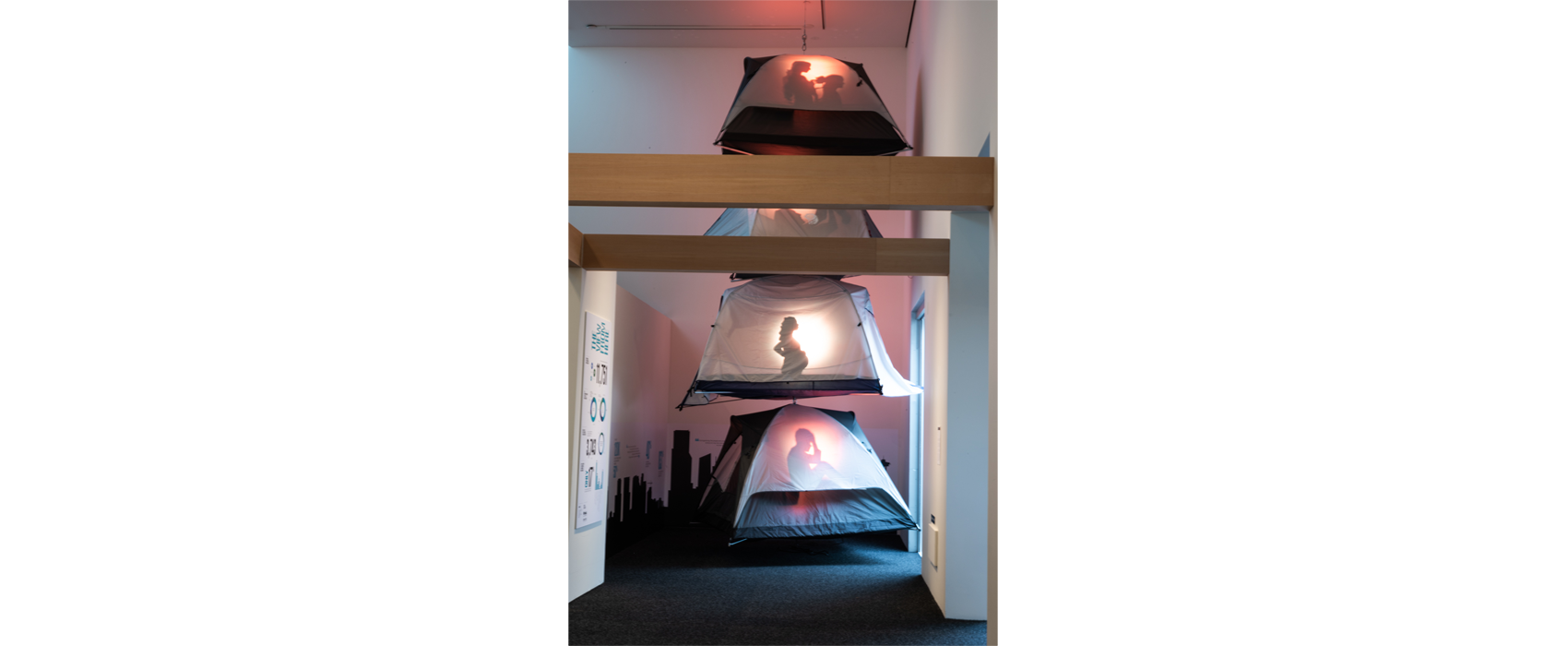
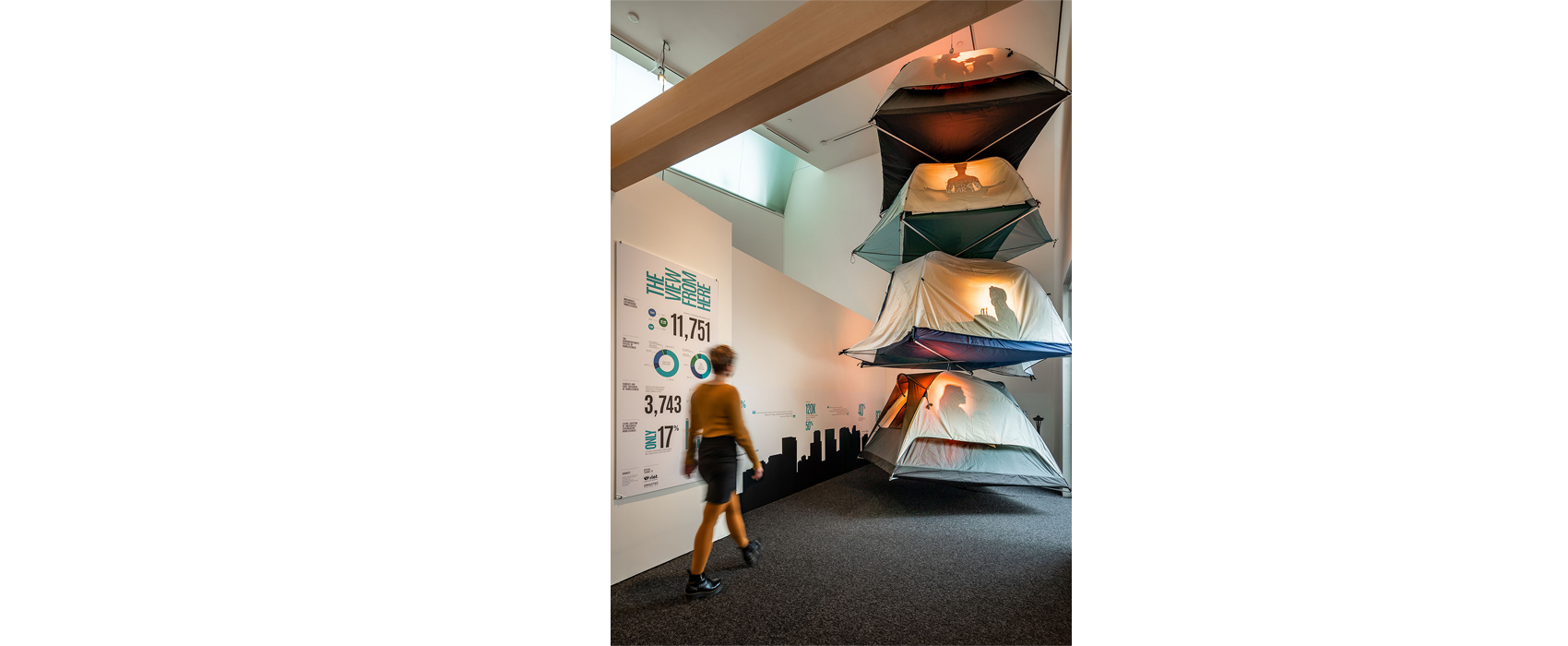
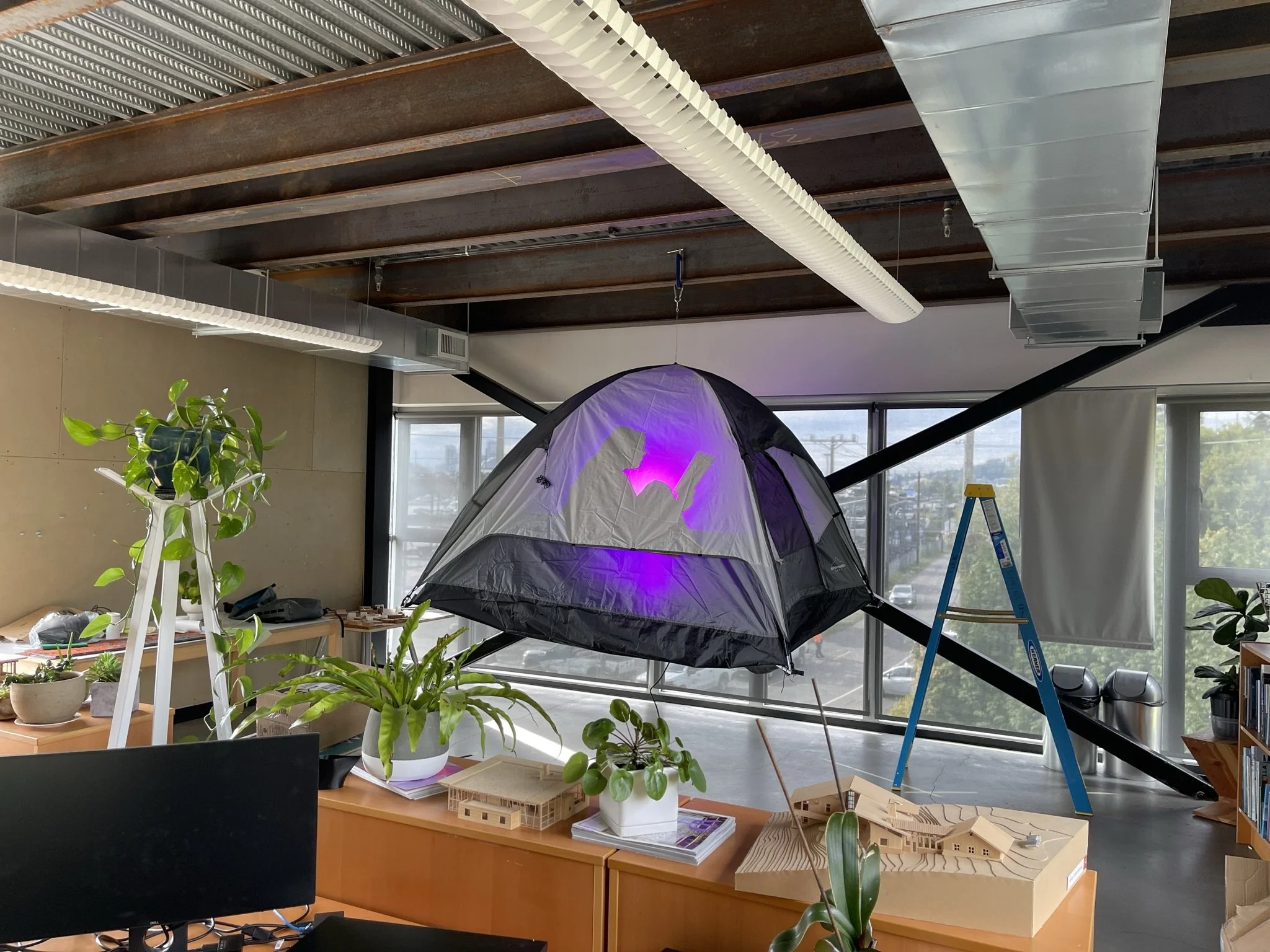
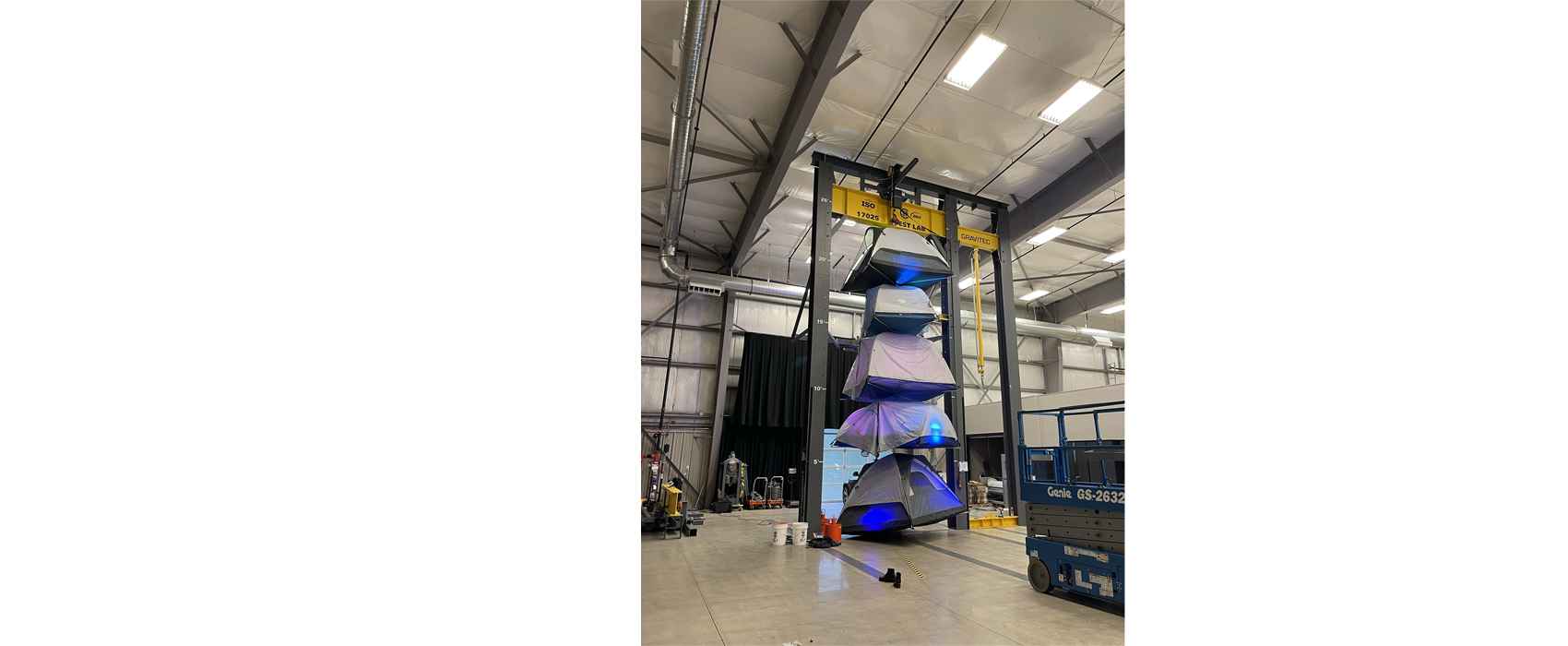
A collaboration with Facing Homelessness, The View From Here shone a light on neighbors who lived unsheltered. In this installation, one could glimpse loved ones sharing meals, parents putting a baby to sleep, or beloved dogs getting their ears scratched. Yet, these familiar scenes often seemed out of place inside the flimsy fabric walls of a tent.

Details
LOCATION Bellevue WA
PROGRAM Bellevue Arts Museum, Biennial Exhibit
COMPLETED November 2021
DIMENSIONS 8’ x 8’ x 21’
MEDIUM Tents, LED Lights, Cardboard, Audio
DESIGNERS Jack Chaffin, Shane Leaman, Liz Wasson Coleman , Jesse Davis,
Jasmyn Flores, Kris Kohl, & Mona Zellers
COLLABORATORS Facing Homelessness, Gravitec
PHOTOGRAPY Andrew Nam, JA Team
AWARDS + RECOGNITION
2021 November, Gray Magazine
2021 November, Seattle DJC

Visitors were invited to come closer. They were asked to notice the invisible walls built between themselves and their unsheltered neighbors, to recognize the familiar, day-to-day rituals that connected us all. Whether the place someone called home was on a cozy cul-de-sac or on the sidewalk, we were more alike than different.

